

TL;DR: The agency you hire decides what you get out of Shopify Plus. Vet for live Plus builds at your order volume, custom Shopify Functions work (the Scripts shutdown made this the cleanest competence test on the platform), migration references with verified data counts, and a named owner for post-launch revenue. Verify every claim in Shopify’s partner directory before the first call.
Shopify Plus projects fail in the agency selection phase more often than in the code. Two agencies quote the same BigCommerce to Shopify Plus migration, one at $45,000 and the other at $140,000, so what is the second one charging for, and is any of it real? The answer shapes your next three years on the platform, because the subscription buys infrastructure while everything a customer touches gets built by the team you hire.
Optimum7 has migrated stores onto Shopify Plus with close to a million historical orders intact, and it has rebuilt stores after other agencies launched them broken. The criteria in this guide come from both sides of that work: what the strong engagements had in common, and what the rescue projects were missing.
What Makes Shopify Plus Different From Standard Shopify
A Shopify Plus agency is hired to operate the parts of Shopify that standard plans never expose, and the vetting only makes sense once you can name those parts. The enterprise plan opens up checkout customization, bespoke backend logic, multi-store architecture, and wholesale features at a scale the lower tiers cap. Each item below is a skill you are paying the agency to already have; if you are still weighing the platform itself, Optimum7’s Shopify Plus vs BigCommerce Enterprise comparison covers that decision separately.


The subscription cost is fixed. Agency fees move with scope, seniority, and validation depth, which is why the hiring decision carries more financial weight than the plan negotiation. A theme-level refresh and a headless dual-storefront build both sit on the same $2,300 per month plan.
Shopify Scripts, Functions, and the June 2026 Shutdown
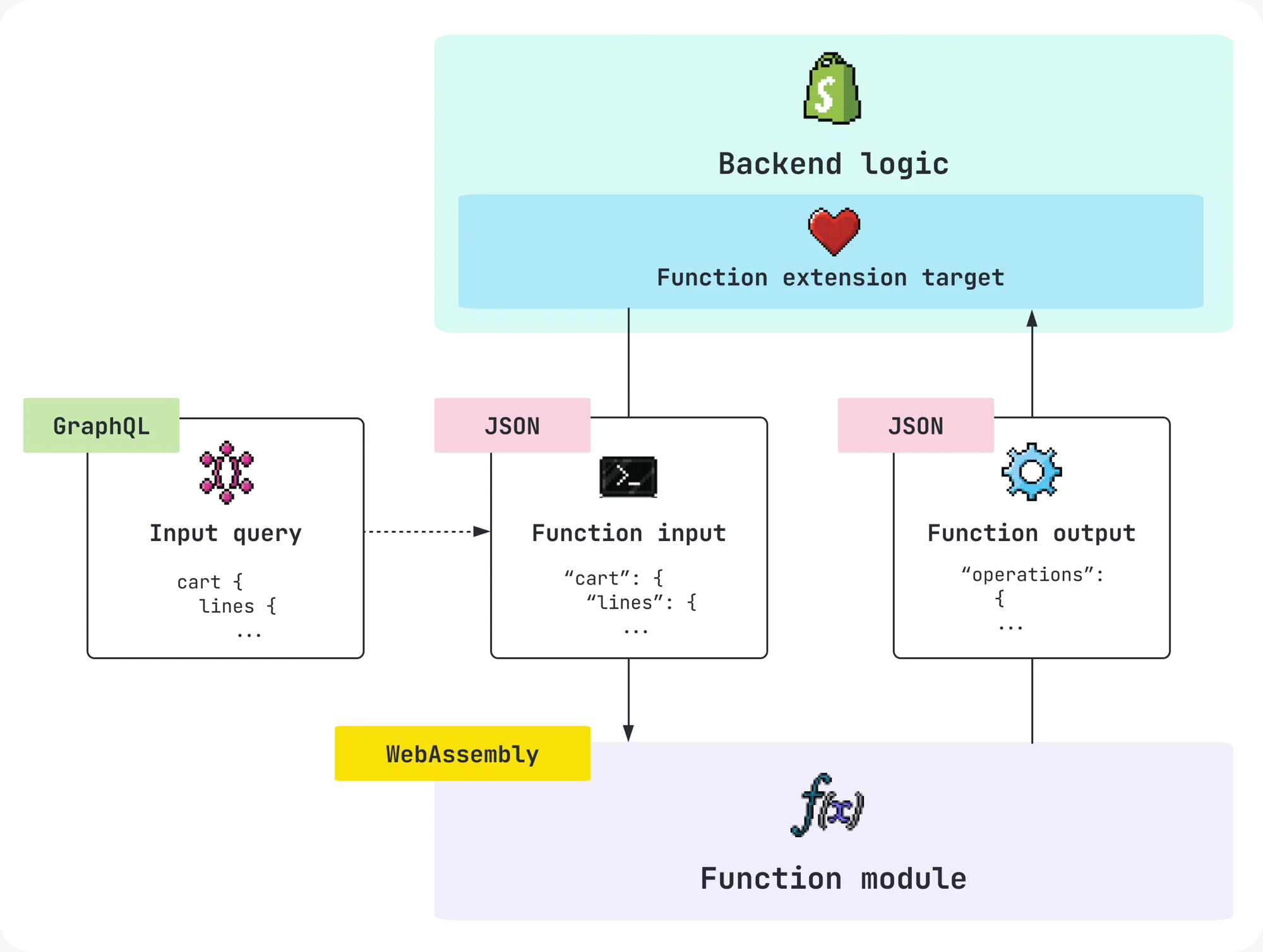
Shopify Scripts was a Plus story from beginning to end. The Script Editor app that ran it shipped to Shopify Plus stores, and for a decade the Ruby scripts it hosted were what made a Plus checkout behave differently: tiered discounts, gated shipping rates, payment method logic. Shopify sunset Scripts on June 30, 2026, and every script still published on that date was deactivated. If a store on Plus had checkout logic, this migration happened to it, which is exactly what makes it the cleanest agency competence test the platform has ever produced.
The replacement is a different animal. Functions are compiled WebAssembly modules running inside Shopify’s infrastructure, so porting a Scripts stack is a rewrite, and an agency that shipped several of those rewrites before the deadline scopes the work accurately while one that only read the documentation guesses. The plan line matters here too: public apps with Functions install on any Shopify plan, but custom apps containing Functions run only on Plus stores. Bespoke checkout logic, the thing you hire an agency to build, stays Plus-exclusive even though Scripts is gone.
Turn this history into two vetting questions. How many Scripts-to-Functions migrations did the agency complete before the shutdown, and for which stores? Which Function APIs has it shipped since: discount, shipping, or payment customization? Optimum7 documented the full audit process in its Shopify Scripts checkout logic audit guide, which doubles as a checklist for evaluating what an agency should have done for its clients months ago.
Six Criteria for Vetting a Shopify Plus Agency
Six criteria separate agencies that run enterprise builds from agencies that resell theme work. Every one of them held in the dual-instance Shopify Plus build for Tees2UrDoor and SugarStitch covered at the end of this guide, and every one comes with a verification step you can run before signing anything.
“Shopify experience” from Basic-plan theme work transfers poorly to enterprise data models and locked-down checkout logic. The portfolio has to show live stores on the Plus plan with order volumes comparable to yours, and an agency proud of its Plus work names them without hesitation.
Discounts, shipping logic, and payment rules on Plus now run through Shopify Functions inside Checkout Extensibility, and an agency without shipped Functions learns the architecture on your invoice. Press on custom apps specifically, since installing a public discount app takes no skill.
Migration references should carry numbers: orders transferred, customer accounts preserved, redirects mapped, downtime taken. Vague “successful migration” claims with no counts usually mean the dataset was small.
The people on the sales call and the people who write the code are usually different, and enterprise work subcontracted to the lowest bidder produces the rescue projects this guide keeps mentioning.
ERP, 3PL, and PIM connections sink more Plus timelines than storefront work does, and the higher API limits that make those connections possible are useless in inexperienced hands.
Launch day is the midpoint of a Plus engagement, and someone on the agency side should own conversion rate, page speed, and revenue metrics for the first 90 days.
The last criterion deserves the hardest push in the room. Who on their team owns your conversion rate in week six? If the answer is a support ticket queue, the engagement ends at launch and every post-launch problem becomes a new invoice.
Shopify Partner Tiers: Select, Plus, Premier, Platinum
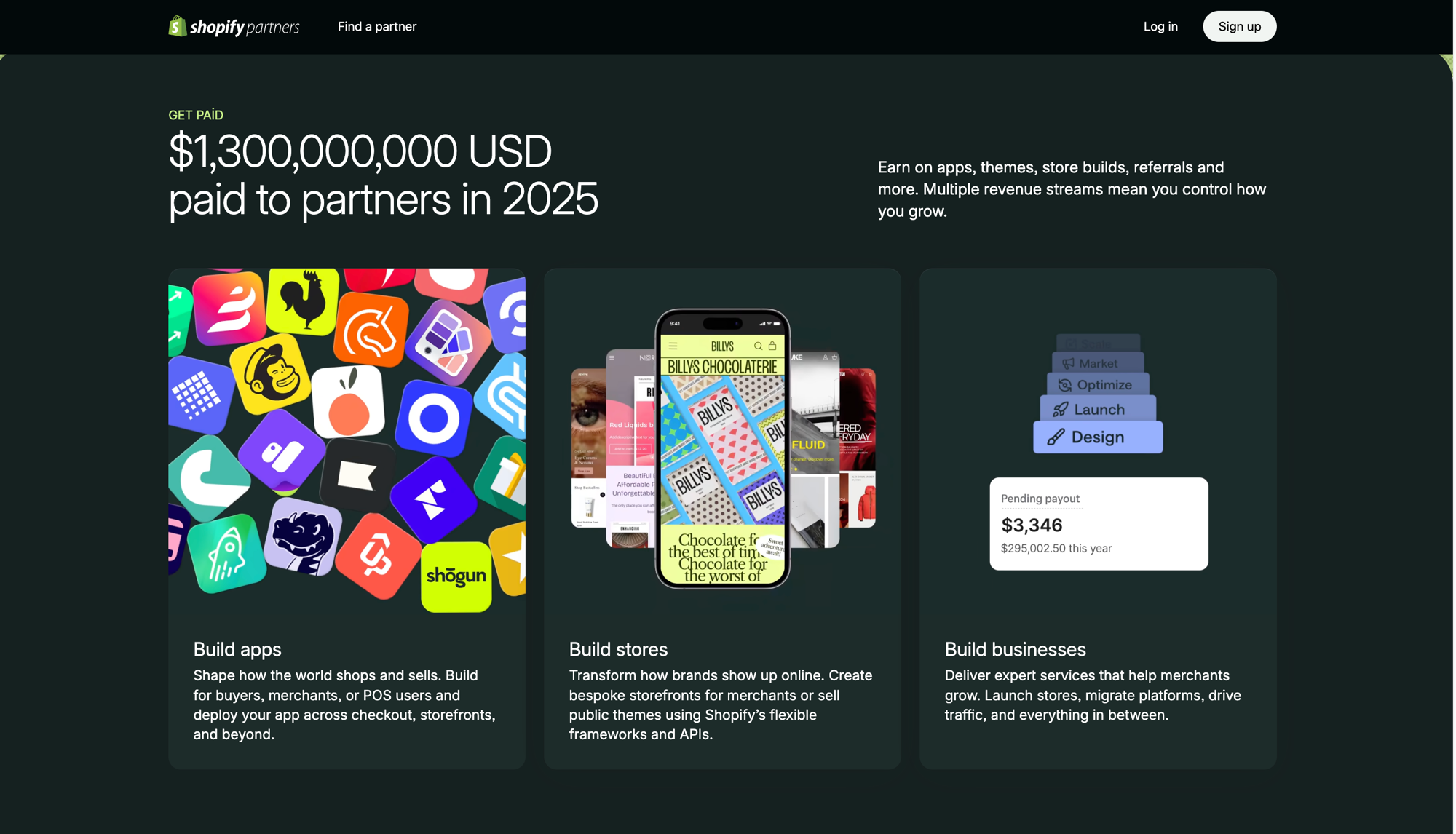
Shopify’s official partner directory sorts agencies into four browsable tiers, and Shopify states that placement reflects a partner’s history of experience and proven success on the platform. Tier is a real signal of project volume and delivery quality, and the table shows how to read each one without over-trusting it.

| Tier | What it signals | What to still verify |
|---|---|---|
| Select | A vetted entry point with real Shopify delivery history. | Any Plus-plan work at all; a strong Select partner may still be new to enterprise scope. |
| Plus | Certified for Plus-plan work specifically. | Confirm the certified work matches your project type: migration, B2B, or custom checkout. |
| Premier | Sustained delivery volume and outcomes above the Plus bar. | Which named projects earned the tier, and if that team is still intact. |
| Platinum | The top of the program, earned on volume, quality, and revenue across projects. | Who staffs your account; the badge belongs to the agency, never to your project team. |
A directory listing carries more than the badge: services, industries, featured work, and merchant reviews all live on the profile. Read the featured work like a portfolio, since an agency chooses what to show there, and an all-DTC profile pitching you a wholesale build is telling you something it will not say out loud.
Shopify Plus Agency vs Freelancer vs In-House Team
Match the builder to the project shape before collecting quotes. A freelancer handles scoped theme work well, an in-house team wins at continuous iteration, and an agency earns its fee on migrations, integration-heavy builds, and compressed timelines. The wrong match costs more than any rate difference between the three.

| Freelancer | In-house team | Plus agency | |
|---|---|---|---|
| Fits best when | Scoped theme or single-feature work with a flexible deadline | Continuous iteration on a store you already run, with developers on staff | Migrations, ERP-connected builds, expansion store rollouts, and hard launch dates |
| Cost structure | Hourly or per project | Salaries plus recruiting time | Project fee, often with a post-launch retainer |
| Biggest risk | One person holds all project knowledge, and QA is whatever they test themselves | Hiring lag, and skills that stale on a single store’s problems | Handoffs and subcontracting, which the vetting in this guide catches |
| Checkout and Functions work | Few freelancers ship production custom Functions apps | Possible with API-fluent developers; budget real training time | Core competency for teams vetted on the criteria above |
What Drives a Shopify Plus Agency Quote
Quote spread on identical scope comes from senior developer time, QA depth, and data validation passes. The $45,000 quote and the $140,000 quote for the same migration differ in the number of validation cycles on your order history, the seniority of the people doing the work, and how much post-launch ownership is priced in. Seven drivers move nearly every Plus quote.
| Cost driver | Why it moves the number | What to ask |
|---|---|---|
| Data migration volume | Order-to-customer relationships, redirect maps, and validation passes scale with history size. | How do you validate order-to-customer links after transfer? |
| Checkout logic | Custom Functions development plus testing across every payment method and market. | Which Functions has your team shipped to production? |
| ERP and 3PL integration | Middleware, sync testing, and failure handling add engineering weeks. | Name the systems you have connected to Plus. |
| Expansion stores and Markets | Each additional storefront multiplies catalogs, redirects, and QA surface. | When do you use an expansion store instead of a Markets configuration? |
| Headless storefront | A custom Hydrogen or API-driven frontend doubles the build and QA surface. | Which live headless builds do you run, and what did each change in conversion? |
| Design scope | Custom design systems cost multiples of theme adaptation, with mobile QA as the hidden line. | Which live stores run this design system today? |
| Post-launch retainer | CRO, monitoring, and iteration priced up front, so the first quarter after launch is already funded. | Who owns performance for the first 90 days? |
What happens to a fixed quote when discovery finds twice the order history the sales call assumed? Agencies with a real discovery phase answer that in the contract, through a documented scope-change process. A team that priced your project unseen answers it with revised invoices once reality surfaces, and those revisions regularly close the entire gap between the cheap quote and the expensive one.
The Six Phases of a Shopify Plus Engagement
A well-run Plus engagement moves through six phases, and knowing them lets you spot a proposal that skips one. Timeline depends on catalog size, order history, and integration count, so treat any schedule quoted before discovery as a guess. The phases themselves are consistent across project types.
The staged migration phase is where enterprise projects earn their budgets. Optimum7’s dual-instance build for Tees2UrDoor used phased transfers with validation between passes, and that structure is what preserved every order-to-customer relationship at a scale where a failed cutover would have been unrecoverable.
Questions to Ask Before You Sign
Bring this list to the second call, after the pitch deck. Every question here has a verifiable answer. Write the answers down; you will compare agencies on them later.
How to Check a Shopify Plus Agency’s References
Reference calls produce fluff unless you ask about friction, since agencies hand out their happiest clients. Four questions get past the curated version: What changed between the original quote and the final invoice? Who from the agency did the daily work, and are those people still there? Which phase slipped, and what did the agency do about it? When something broke in the first week after launch, how fast did it get fixed?
Then verify what no reference call can settle. Run the agency’s portfolio store URLs through PageSpeed Insights on mobile, since slow flagship builds predict a slow build for you. Confirm the partner tier in Shopify’s directory yourself. Add a product to cart on two of their live stores from your phone and walk the checkout to the payment step; five minutes of that tells you more about build quality than any slide in the deck.
Red Flags in Shopify Plus Agency Proposals
Some warning signs surface in the first proposal, before any reference call. Each pattern here shows up repeatedly in the projects Optimum7 gets hired to rescue.
B2B and Wholesale Vetting After the April 2026 Change

On April 2, 2026, Shopify extended its foundational B2B features to every paid plan. An agency waving “we do B2B on Shopify” as a Plus credential is four months out of date, and that alone is a useful screen.

| Capability | Every paid plan (since April 2026) | Shopify Plus |
|---|---|---|
| Company profiles | Included | Included |
| Custom catalogs | Up to three | Unlimited |
| Direct catalog assignment to companies and locations | Not included | Included |
| Volume discounts and quantity rules | Included | Included |
| Payment terms and vaulted credit cards | Included | Included |
| Deposits and partial payments | Not included | Included |
| Payment requests per fulfillment | Not included | Included |
The vetting question is which column your wholesale program needs, and a qualified agency draws that line for you unprompted. Three catalogs cover a simple dealer program, while a distributor operation running account-specific pricing across hundreds of companies lives in the Plus column and needs the API headroom to connect it to an ERP. Ask for live B2B stores the team has shipped and how it wired account-based pricing to the client’s back office, because that connection is where wholesale builds stall.
Running retail and wholesale together raises one more architecture question, and a qualified agency brings it up before you do: one store with B2B features, or separate instances per channel. Optimum7 took the second path for Tees2UrDoor and its wholesale sister brand SugarStitch, giving each channel its own Shopify Plus instance under a common parent so retail promotions and wholesale terms never collide. For the operational side of distributor selling, Optimum7’s guide to building a B2B ecommerce platform for distributors goes deeper on quoting, credit, and catalog logic.
The Results a Shopify Plus Agency Should Show You
Hold any agency asking for enterprise budgets to a documented-results standard: named clients, real numbers, and work its team can walk you through. Two Optimum7 engagements show what that evidence looks like: a dual-instance Plus migration that moved 930,000+ orders with zero downtime, and a front-end-only redesign for VAIO that lifted conversion rate +425% with no backend changes.
Legacy platforms count too: Kiyonna, a fashion retailer operating since 1999, came to Optimum7 on an aging Miva installation and left with a cleaned catalog, a full redesign, and Searchspring-powered product discovery on Shopify Plus. When the shortlist narrows, Optimum7’s ecommerce development team scopes Plus builds through a discovery phase first, and the ecommerce migration service page details the data validation process behind the zero-downtime record.
Frequently Asked Questions
How much does Shopify Plus cost per month?
Shopify Plus costs $2,500 per month on a one-year term or $2,300 per month on a three-year term, per Shopify’s published pricing. Agency fees for the build, migration, and ongoing optimization are separate and vary with scope, which is why the vetting process matters more than the plan itself.
What is the difference between a Shopify agency and a Shopify Plus agency?
A Shopify Plus agency works the enterprise plan’s surface: checkout customization, custom Functions apps, expansion stores, and wholesale features at scale. A general Shopify agency builds themes, apps, and campaigns on standard plans; Optimum7’s list of the top Shopify marketing agencies covers that market. Either way, ask which live stores run on Plus.
Was Shopify Scripts only available on Shopify Plus?
Yes. The Script Editor app that ran Shopify Scripts shipped to Plus stores, and Shopify deprecated Scripts entirely on June 30, 2026. Checkout logic now runs on Shopify Functions, and custom apps containing Functions remain exclusive to Plus, so bespoke checkout work is still a Plus-agency skill.
Do you still need Shopify Plus for B2B?
Since April 2026, foundational B2B features (company profiles, three catalogs, volume discounts, payment terms) come with every paid Shopify plan. Plus remains the fit for wholesale at scale: unlimited catalogs, direct catalog assignment to companies and locations, deposits, and partial payments.
Do I need a certified Shopify Plus Partner?
Certification is a strong filter and a weak final answer. Shopify’s directory tiers (Select, Plus, Premier, Platinum) reflect verified project history, so start there. Then weigh the evidence a badge cannot carry: named builds in your vertical, the actual assigned team, and migration references with data counts.
How long does a migration to Shopify Plus take?
Timeline follows scope: catalog size, order history volume, integration count, and checkout complexity each add weeks. Distrust any fixed timeline quoted before discovery. A credible agency ties its schedule to data validation milestones and gives you a range that tightens after it has examined your store.
About the author: Duran Inci is the CEO and Co-Founder of Optimum7, an ecommerce development and digital marketing agency. He helps mid-market and enterprise brands scale revenue through conversion optimization, SEO, and custom ecommerce solutions.