

Shopify commands 30% of the US ecommerce platform market, more than WooCommerce and Wix combined (Charle Agency / Storeleads, 2026). There are approximately 2.8 million active Shopify stores worldwide as of early 2026, with 47,000+ on Shopify Plus. Total merchant revenue has crossed $1.4 trillion, and 875 million consumers bought from a Shopify store in 2024 (Omnisend, 2025). At this scale, the platform itself is table stakes. What separates growing stores from stagnant ones is the execution behind them.
That scale has also produced a saturated, noisy agency market. Thousands of firms claim Shopify expertise. Most have completed one or two Shopify projects and market themselves as specialists. The difference between a real Shopify specialist and a generalist reselling standard digital marketing services can mean a 30% revenue lift or a wasted six-figure retainer.
This guide ranks ten agencies by verified results, documented specialization, and honest assessments including weaknesses. It is published by Optimum7, one of the agencies on the list. The same evaluation criteria apply to every agency here, Optimum7 included.
TL;DR: Shopify powers 30% of US ecommerce (Charle Agency, 2026) and the agency market has matured to match. This guide ranks 10 verified Shopify specialists by focus area and documented results. If you’re on Shopify Plus, a commissioned Forrester study found migrations average 220% ROI over 3 years (Forrester TEI, 2025). The right agency depends entirely on which constraint is actually holding your store back right now.
All 10 Agencies at a Glance
Use this table to shortlist agencies based on your specialization need, budget range, and stage. Then read the full section for each to understand fit, weaknesses, and who they’re actually built for.
| Agency | Core Focus | Best For | Plus Partner | Headline Stat | Est. Monthly |
|---|---|---|---|---|---|
| Optimum7 ★ | Full-stack dev + marketing | Dev + marketing combined | ✓ | $1B+ client revenue mgd | $5K–$20K+ |
| OnlyGrowth | CRO / Conversion | Traffic with low CVR | ✓ | +39% CVR (case study) | ~$3K+ |
| NP Digital | Full-service / Paid | Enterprise multi-channel | ✓ | 259% avg client ROI | $5K–$25K+ |
| Inflow | SEO + PPC | $2M–$20M ecommerce | — | 97% client retention | $3K–$10K |
| Single Grain | Paid + AI tooling | DTC cross-channel scale | — | 3.2x avg client ROI | $5K–$15K |
| Stryde | SEO (DTC-focused) | $500K–$5M DTC brands | — | +35% avg YoY growth | $1.5K–$5K |
| seoplus+ | Shopify SEO | Organic-first growth | — | 4.9/5 (100+ reviews) | $3K+ |
| Cake Commerce | eCommerce strategy | Platform decisions / consulting | — | eCommerce-only practice | $4K–$15K |
| Lounge Lizard | Design / UX | Brand-constrained stores | — | 27 years in operation | $5K–$15K |
| Mobiteam | Shopify Development | Custom builds, intl expansion | — | 2 successful brand exits | Project-based |
★ Optimum7 is the publisher of this guide. Pricing ranges are estimates based on publicly available data and should be confirmed directly. Plus Partner = verified Shopify Plus Partner status.
Agency Tenure: Years in Operation
Survival in the agency world is harder than it looks. Firms that have operated for 10 or more years have lived through platform migrations, Google core updates, iOS privacy changes, and economic cycles that eliminated competitors who built on narrower foundations. This chart shows how long each agency has been operating, not as a shortcut to quality, but as a signal of durability.
| Agency | Years in Operation (as of 2026) |
|---|---|
| Lounge Lizard | 27 years |
| Inflow | 18 years |
| Optimum7 | 15+ years |
| Single Grain | ~15 years |
| seoplus+ | 14 years |
| Stryde | 13 years |
| NP Digital | 9 years |
| Mobiteam | 8 years |
| OnlyGrowth | ~4 years |
Source: Optimum7 editorial research, 2026. Cake Commerce excluded (founding date unverified).
Estimated Monthly Retainer Ranges
Budget misalignment is the most common reason discovery calls go nowhere. This chart shows estimated monthly retainer ranges based on publicly available pricing and industry benchmarks. Treat these as orientation, not quotes. Scope, ad spend, and team size all shift the number. Confirm directly with each agency before entering a formal process.
| Agency | Estimated Monthly Range (USD) |
|---|---|
| Stryde | $1,500–$5,000 |
| OnlyGrowth | $2,000–$6,000 |
| seoplus+ | $3,000–$8,000 |
| Inflow | $3,000–$10,000 |
| Single Grain | $5,000–$15,000 |
| Optimum7 | $5,000–$20,000+ |
| NP Digital | $5,000–$25,000+ |
Estimates from published starting prices and industry benchmarks, 2026. Confirm ranges directly with each agency. Cake Commerce, Lounge Lizard, and Mobiteam excluded; pricing varies by project scope.

1. Optimum7: Full-Stack Shopify Plus Development and Marketing
Optimum7 is the publisher of this guide. The same evaluation questions apply here as to any other agency on this list.
Optimum7 manages $1B+ in annual client revenue and has documented 200+ Shopify-specific case studies across healthcare, automotive, B2B wholesale, and DTC apparel (Optimum7, 2026). Miami-based, 15+ years in operation, 60+ specialists across development, SEO, PPC, CRO, and email marketing.
The differentiator that earns this ranking: Optimum7 is one of the only agencies on this list that combines custom Shopify development with full-funnel marketing under a single team. Most other agencies here specialize in one or the other. Services span the full stack: Shopify Plus migrations, custom app development, technical SEO, Google and Meta paid media, CRO, and lifecycle email marketing, coordinated as one program rather than separate retainers running independently.
Across 200+ Shopify engagements, the brands that grow fastest share one pattern: they fix one constraint at a time, traffic, conversion rate, average order value, or retention. Every engagement starts with a 30-day audit and prioritization phase to surface which lever moves revenue first and prevent misaligned spend.
2. OnlyGrowth: Conversion-First Shopify Plus Specialists
OnlyGrowth delivered +60% orders, +39% conversion rate, and +8% average order value within two months for one DTC client (Agency-reported, 2025). They’ve served 125 companies and moved 500,000+ products since founding. Those numbers are narrow and specific, which is exactly the point.
Every engagement is scoped around converting existing traffic into buyers, not acquiring new traffic. That’s a sharper focus than most agencies on this list, and it matters for Shopify Plus brands that already have volume but are losing revenue at the product page or checkout. A 39% lift in conversion rate at scale produces more revenue than most traffic campaigns at the same budget.
Their methodology centers on structured testing: conversion copy, checkout flow adjustments, and product page architecture. What they don’t do is try to upsell into channel management, SEO, or content programs. If conversion rate optimization is your primary constraint, OnlyGrowth is one of the few agencies on this list built entirely around it. If your problem is traffic, they’re not the right call.
3. NP Digital: Performance Marketing at Scale
NP Digital was named Performance Marketing Global Agency of the Year 2024 (PMW Global Awards) and reports an average client ROI of 259% (Neil Patel Digital, 2024). Founded by Neil Patel, the agency manages over $6.1 million in ad spend monthly across 60+ enterprise brands and 1,500+ SMB clients. That’s infrastructure most agencies can’t touch.
Their strength is multi-channel breadth backed by real systems. SEO, paid media, content marketing, and analytics run through integrated teams, not freelancers assembled per project. Brands that need cross-channel execution at volume will find the processes are already in place.
The honest tradeoff: enterprise clients get senior attention; smaller brands sometimes get junior account managers once the engagement is underway. NP Digital’s size is an asset at scale and a potential liability at $5K/month. Ask specifically who owns your account day-to-day and at what seniority level before signing anything.
4. Inflow: eCommerce SEO and PPC Specialists
Inflow holds a 97% client retention rate and delivered a 785% revenue increase for Seltzer Goods in 30 days (Agency-reported, 2025). Founded in 2007 and operating out of Denver and Tampa, the agency manages $2M+ in monthly ad spend. A 97% retention rate is rare in this industry. It typically signals that clients are getting what they were promised, not just what was marketed to them during the sales process.
Their scope is deliberately narrow: SEO, PPC, and CRO for ecommerce brands only. No website builds. No PR. No brand strategy. Every specialist they assign carries deep ecommerce channel expertise rather than generalist knowledge stretched across verticals. That’s a fundamentally different arrangement than a full-service agency assigning the same person to five different industries simultaneously.
Inflow is a strong match for mid-market Shopify brands in the $2M–$20M annual revenue range that are ready to scale paid and organic together. If you’re outside that range, their scoping and pricing may not fit.
5. Single Grain: AI-Informed Cross-Channel Growth
Single Grain’s work for Peet’s Coffee produced a +455% revenue increase and +676% order volume growth through a cross-channel paid and content strategy (Agency-reported, 2024). Based in Los Angeles, they work with 500+ companies and report a 3.2x average ROI. They’ve been integrating AI tools into campaign workflows earlier and more systematically than most agencies at their scale.
The differentiator isn’t just the performance numbers. Single Grain has built proprietary AI tooling for campaign optimization, audience segmentation, and content scaling. In 2026, that’s an operational reality, not a positioning claim. For brands where cross-channel attribution is the main analytical challenge, that infrastructure carries real weight in terms of how quickly they can diagnose and respond to what’s working.
Best suited for Shopify brands with existing paid media budgets looking to extend performance further, particularly in DTC categories where multiple channels touch the same customer before conversion completes. If you’re just starting paid media, the engagement will likely be oversized for your stage.
6. Stryde: SEO-Led Growth for DTC Brands
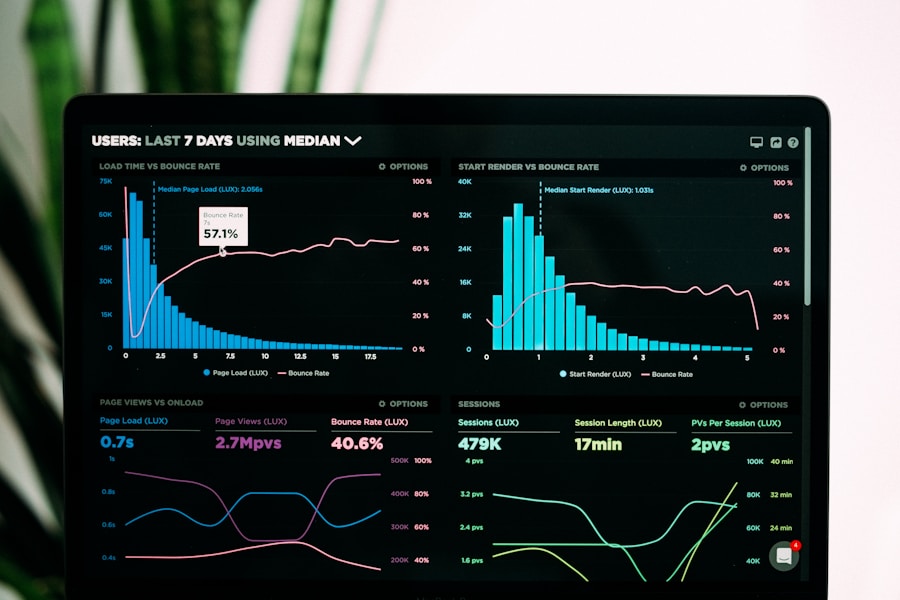
Stryde reports a 35% average year-over-year growth rate for DTC clients in fashion, baby, home, and lifestyle categories (Agency-reported, 2024). Founded in 2013 and based in Lehi, UT, the agency is women-led and built specifically around organic search for consumer brands. That focus has produced a documented body of work in verticals that larger agencies routinely overlook.
They’re not competing with full-service agencies on paid media or development. Stryde’s thesis is that durable DTC growth starts with search visibility, and their entire operation is structured around that. For brands in saturated DTC categories, organic search equity compounds in a way paid spend doesn’t: when ad budgets get cut, organic traffic stays. When ad costs inflate, organic doesn’t move.
Stryde is a strong fit for emerging DTC brands in the $500K–$5M revenue range that want to build search equity alongside paid channels. If you need paid, development, or CRO support alongside SEO, you’ll need to bring in a second agency, which creates its own coordination cost.
7. seoplus+: Verified Shopify SEO with Transparent Pricing
seoplus+ holds a 4.9/5 star rating across 100+ verified client reviews, with Shopify SEO plans starting at approximately $3,000/month (G2 / Clutch, 2025). Founded in Ottawa, Ontario in 2012, the agency has built a reputation for technical Shopify SEO with pricing structures that are unusually legible for this industry.
Transparent pricing is rarer than it should be. seoplus+ publishes starting rates, which makes early conversations productive. You know within the first call whether the engagement is financially viable, rather than completing three weeks of discovery before seeing a proposal that doesn’t fit your budget. That alone saves a meaningful amount of time for both sides.
Core strengths: technical SEO audits, on-page optimization, and content strategy built around Shopify’s CMS constraints. Well-suited for brands that have identified organic search as their primary growth channel and want a specialist, not a generalist with SEO as one of twelve service offerings on a rate card.
8. Cake Commerce: Pure eCommerce Strategy and Consulting
Cake Commerce operates as an ecommerce-only agency. No brand campaigns, no B2B lead generation, no generalist retainers (Agency-reported, 2025). Based in Connecticut, the agency’s entire practice covers ecommerce consulting, strategy, design, and development for Shopify merchants. That refusal to diversify is deliberate and signals where their expertise actually sits.
Fewer public performance statistics are available for Cake Commerce than for larger agencies on this list. That’s worth stating directly, not hedging. What they publish focuses on the depth of client relationships and strategic advisory work rather than headline metrics. That model fits established brands who’ve already run performance programs and now need clearer strategic direction on platform architecture, catalog structure, or long-term roadmap decisions.
Best suited for Shopify merchants who’ve outgrown tactical execution and need an expert sounding board for platform decisions: which features to build, how to structure the catalog, and where the largest structural revenue opportunities sit before committing engineering resources.
9. Lounge Lizard: Design Heritage and Shopify UX
Lounge Lizard was founded in 1998, giving it 27+ years of ecommerce design experience and making it one of the longest-operating digital agencies on this list (Agency-reported, 2026). With offices in New York, Washington D.C., and Nashville, they’ve built a substantial portfolio in web design, UX/UI, and creative branding for Shopify merchants.
Longevity in this industry isn’t just a credential worth mentioning in passing. An agency that has operated since 1998 has survived the dot-com crash, multiple platform migrations, at least four major Google algorithm eras, iOS attribution changes, and two economic recessions. Their design methodology has been tested and refined across multiple generations of ecommerce best practices, not just the current one.
Lounge Lizard fits Shopify brands where brand presentation is the primary growth constraint: stores where conversion is limited by design quality, visual trust signals, or UX friction rather than traffic volume or channel mix. Their development capabilities support the creative work, not the other way around. If your problem is that you need more traffic or better paid media, they’re not the right fit.
10. Mobiteam: Shopify Development and International Expansion
Mobiteam, a Berlin-based 14-person agency, has launched 3 startups on Shopify and facilitated 2 successful exits to US and UK acquirers (Agency-reported, 2025). Exit outcomes for boutique development agencies are uncommon. Most dev shops build stores and hand them off. Eight years of Shopify development experience backs those results.
Their focus is technical: store builds, custom functionality, and international expansion infrastructure. For brands entering European markets or building complex Shopify architectures, Mobiteam brings technical precision that larger generalist agencies rarely prioritize at the same depth. Their small team size means senior involvement throughout, not just on the pitch.
Best suited for Shopify brands at the startup-to-growth stage that need serious development work: custom apps, third-party integrations, multi-market expansion. Brands that prefer a tight, senior team over a large agency where junior developers carry most execution will find the structure here suits them. The tradeoff is capacity, a 14-person shop has limits on parallel workstreams.
How to Choose the Right Shopify Marketing Agency
Most agency comparison content offers advice like “look for experience and strong communication.” That’s not useful. Here are five criteria that actually separate a well-matched agency from a costly engagement that produces nothing actionable for your specific store.
1. Specialization Match: Start With Your Constraint, Not Their Brand
An agency’s core strength should map to your biggest constraint. Generating traffic but not converting? You need a CRO-focused partner, not an SEO agency. No organic visibility? A development retainer won’t move revenue. Mismatched specialization is the most common reason Shopify agency engagements produce nothing after six months of spend.
Using the table above: Optimum7 for full-stack development and marketing under one team; OnlyGrowth and Inflow for conversion and channel scale; Stryde and seoplus+ for Shopify SEO; NP Digital and Single Grain for paid media at volume; Lounge Lizard for design-driven conversion; Mobiteam for custom development; Cake Commerce for strategic consulting. Start with your constraint, then match the agency.
One scenario worth examining separately: brands that need both development and marketing running simultaneously. A Shopify Plus migration that lands on a store still running underperforming paid campaigns won’t generate the ROI the migration was supposed to unlock. If your growth requires fixing infrastructure and channels at the same time, that narrows the field to agencies with genuine depth across both disciplines.
2. Shopify Plus Certification: It’s Not Just a Badge
A commissioned Forrester study found that Shopify Plus migrations average 220% ROI over three years (Forrester TEI, commissioned by Shopify, 2025). Capturing that return requires an agency that understands what Plus actually unlocks: Launchpad automation, B2B wholesale features, customizable checkout via Checkout Extensibility, and Flow workflows that don’t exist on standard plans. You can review the full breakdown of Shopify Plus benefits to evaluate whether it fits your stage.
If you’re on Plus or planning to migrate, work only with verified Shopify Plus Partners. A standard Shopify agency can do solid work up to a point, but they’ll reach their technical ceiling quickly once your requirements move beyond what the base platform supports natively. The certification reflects tested platform depth, not just general familiarity.
3. Pricing Transparency: Get the Number Early
Budget misalignment kills more agency evaluations than any other factor. Focused SEO retainers start around $1,500–$3,000/month for earlier-stage brands. Full-service enterprise engagements at agencies like NP Digital or Optimum7 run $10,000–$20,000+/month depending on scope. If you’re still orienting around what Shopify Plus costs before budgeting for an agency, start there first.
Watch for agencies that won’t give you a ballpark before a discovery call. Pricing opacity at that stage is a signal. Legitimate agencies know their minimum engagement size and will tell you upfront if you’re not a fit, rather than spending three weeks on discovery before surfacing a number you can’t work with.
4. Case Study Relevance: Same Vertical, Same Revenue Stage
A case study showing 800% revenue growth for a $50M brand tells you very little about what that agency can do for a $2M store. Ask agencies specifically for examples from your vertical and your revenue stage before committing to any discovery process. Optimum7’s Shopify case studies are organized by industry for exactly this reason.
Also examine what metric they lead with. An agency that highlights traffic growth without conversion data is showing half the picture. The most credible case studies tie a specific tactic to a specific revenue outcome with a timeline and a starting baseline.
5. Team Access: Who Actually Does the Work
This is the question most brands forget to ask. Larger agencies frequently use senior talent on the sales cycle, then transfer daily account management to junior team members once the contract is signed. That’s not always a dealbreaker, but it’s worth knowing before you commit.
Ask directly: “Who will be on my account day-to-day, and what’s their experience level?” Ask to meet them before signing. An agency confident in its team will accommodate that without hesitation. One that can’t or won’t is worth scrutinizing further before proceeding.
Frequently Asked Questions About Shopify Marketing Agencies
What does a Shopify marketing agency do?
A Shopify marketing agency handles services scoped to Shopify’s ecosystem: SEO, paid advertising, email marketing, conversion rate optimization, UX design, and custom development. A true specialist understands Shopify’s platform constraints and knows how to work within them, including checkout customization limits on standard plans and theme architecture decisions that affect page speed and conversion rates. They differ from a general digital marketing agency in that their processes, tools, and case studies are built specifically for ecommerce merchants.
How much do Shopify marketing agencies charge?
Pricing ranges from approximately $1,500/month for focused SEO retainers to $20,000+/month for full-service enterprise engagements. Project-based work (migrations, redesigns, app builds) varies widely by scope. seoplus+ starts at approximately $3,000/month for Shopify SEO. Larger full-service agencies like NP Digital manage $6.1M+/month in ad spend, with pricing to match. Most legitimate agencies will disclose their minimum engagement size before a discovery call, and that transparency is worth looking for when evaluating options.
Should I use a Shopify Plus agency or a standard Shopify agency?
If you’re on Shopify Plus or planning to migrate, a commissioned Forrester study found the average migration yields 220% ROI over three years (Forrester TEI, 2025). A Plus-certified agency understands the features that justify that investment: Launchpad event scheduling, B2B wholesale functionality, checkout extensibility, and automation workflows. Standard Shopify agencies can do solid work, but they’ll reach their ceiling when your requirements go beyond what the base platform supports. If Plus is in your roadmap, make certification a firm requirement, not a nice-to-have.
How do I evaluate a Shopify agency’s track record?
Ask for case studies in your vertical and your revenue range. Check third-party review platforms like G2, Clutch, and Google Business Profile, not just testimonials on the agency’s own site. Ask who specifically will work on your account. Look for case studies that tie a specific tactic to a specific revenue outcome with a timeline. Inflow’s 97% retention rate and 785% revenue lift for Seltzer Goods in 30 days represent the kind of specific, verifiable claims worth using as a benchmark when evaluating any agency on this list.
Can a small brand benefit from a Shopify marketing agency?
Yes, but scope and budget alignment matter. Stryde and seoplus+ both work with earlier-stage DTC brands and offer more accessible pricing than enterprise-focused agencies. Look for transparent minimum engagement terms that match your runway. A six-month SEO retainer at $3,000/month carries a very different risk profile than a $15,000/month full-service engagement. Start with the specific growth constraint you need to solve, then find an agency whose core strength matches it.
The Bottom Line on Shopify Marketing Agencies in 2026
Shopify commands 30% of US ecommerce, $1.4 trillion in total merchant revenue, and 875 million buyers in 2024. The agency ecosystem serving those merchants has matured to match. The ten agencies on this list represent different philosophies, specializations, and price points. None of them is the right fit for every store.
Four things worth carrying from this guide. Start with your constraint, not an agency’s brand or client roster. Shopify Plus certification matters if you’re on Plus or planning to migrate. Ask every agency for case studies from your specific vertical and revenue stage before entering a discovery process. And ask who actually owns your account day-to-day, not who’s on the sales call.
The agencies that deliver the strongest outcomes are the ones whose specialization matches your primary growth lever at your current stage. That match matters more than any agency’s overall reputation or headline client list.
For brands evaluating Optimum7 against those criteria: 200+ Shopify case studies are on the site, organized by industry. The team that handles discovery is the same team that handles delivery. If there’s a mismatch between what a store needs and what Optimum7 is built to execute, that conversation happens before the contract, not after. Start that conversation here.
About the author: Duran Inci is the Co-founder and COO of Optimum7, a Shopify development and ecommerce growth agency. He has 20+ years of experience helping DTC and B2B brands scale through conversion-focused development and digital strategy.