

TL;DR: A product configurator behaves differently on each platform. Magento offers the deepest native configuration and the highest running cost, BigCommerce pairs a 600-variant ceiling with unlimited pricing rules, Shopify caps every product at three options, and WooCommerce trades plugin freedom for maintenance you own. This compares all four and shows when a custom build earns its cost.
Search product configurator and every result sells you a tool. The harder question comes first: which ecommerce platform should run the configurator at all? A made-to-order catalog behaves differently on Magento than it does on Shopify, and the gap shows up in variant ceilings, pricing logic, and how much custom development each platform demands. If your team is weighing a build or a replatform, is the configurator requirement driving the platform choice, or is the platform quietly capping what your configurator can ever do?
The four platforms below cover most made-to-order catalogs: Magento (now sold as Adobe Commerce), BigCommerce, Shopify, and WooCommerce, with a short note on PrestaShop and OpenCart. Optimum7 builds custom configurators as a Shopify Plus Partner and BigCommerce Elite Partner, and the examples throughout are real client work. For how a configurator works under the hood and what a custom build contains, the ecommerce product configurator guide goes deep.
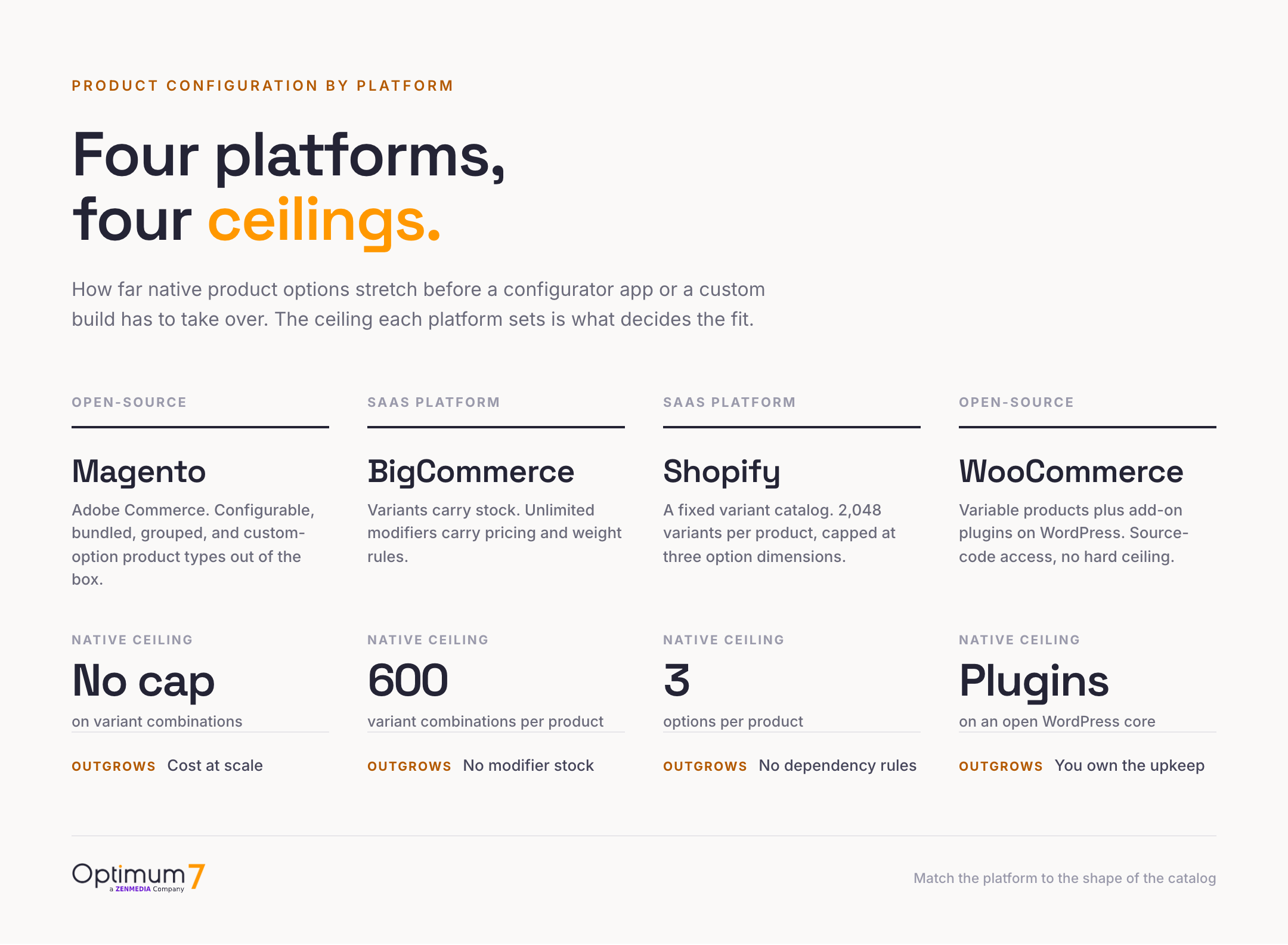
How product configuration differs across ecommerce platforms
For complex product configuration, the platforms rank by how much dependency logic and computed pricing they support before you add code. Magento (Adobe Commerce) gives the most native configuration power, BigCommerce handles rule-based pricing well but caps variant combinations, Shopify is built for a fixed variant catalog, and WooCommerce leaves configuration to plugins. The right choice comes down to three technical questions.


Here is how the four platforms compare on those three questions.
| Platform | Native configuration ceiling | Best-known configurator apps | When you outgrow it |
|---|---|---|---|
| Magento / Adobe Commerce | Highest: configurable, bundled, grouped, and custom-options product types, no hard variant cap | Amasty, Mirasvit, Custom Product Builder | Performance and total cost at scale; dependency rules beyond native attribute logic |
| BigCommerce | 600 variant combinations per product; unlimited modifiers with pricing rules | Zakeke, KR Customizer, Inkybay | Inventory on modifier options; catalogs past the 600-variant cap; component pricing |
| Shopify / Shopify Plus | 2,048 variants but three options per product; fixed variant model, no dependency rules | Zakeke, Kickflip, Custom Product Builder | More than three option dimensions; conditional logic; computed pricing |
| WooCommerce | Variable products plus add-on plugins; flexible, open-source | Product Add-Ons, Product Configurator plugins | Performance under load; plugin conflicts; maintenance you own |
Magento product configurator: the deepest native configuration, at the highest running cost
Magento 2, sold today as Adobe Commerce, gives you the most native configuration power of the four platforms. Its open architecture and four product types cover selection scenarios that Shopify and BigCommerce need apps to reach, with no fixed cap on variant combinations. The trade is total cost of ownership: Magento carries the heaviest hosting, development, and maintenance bill in this comparison, and a large configurable catalog can strain it without careful engineering.
What Magento does natively. Four product types do most of the work. Configurable products generate a buyable item per attribute combination, bundled products let a shopper assemble a kit from component choices, grouped products present related items together, and custom options add per-product fields such as text, dropdowns, and file uploads with price adjustments. Together they handle multi-attribute selection and additive pricing without a single extension installed.
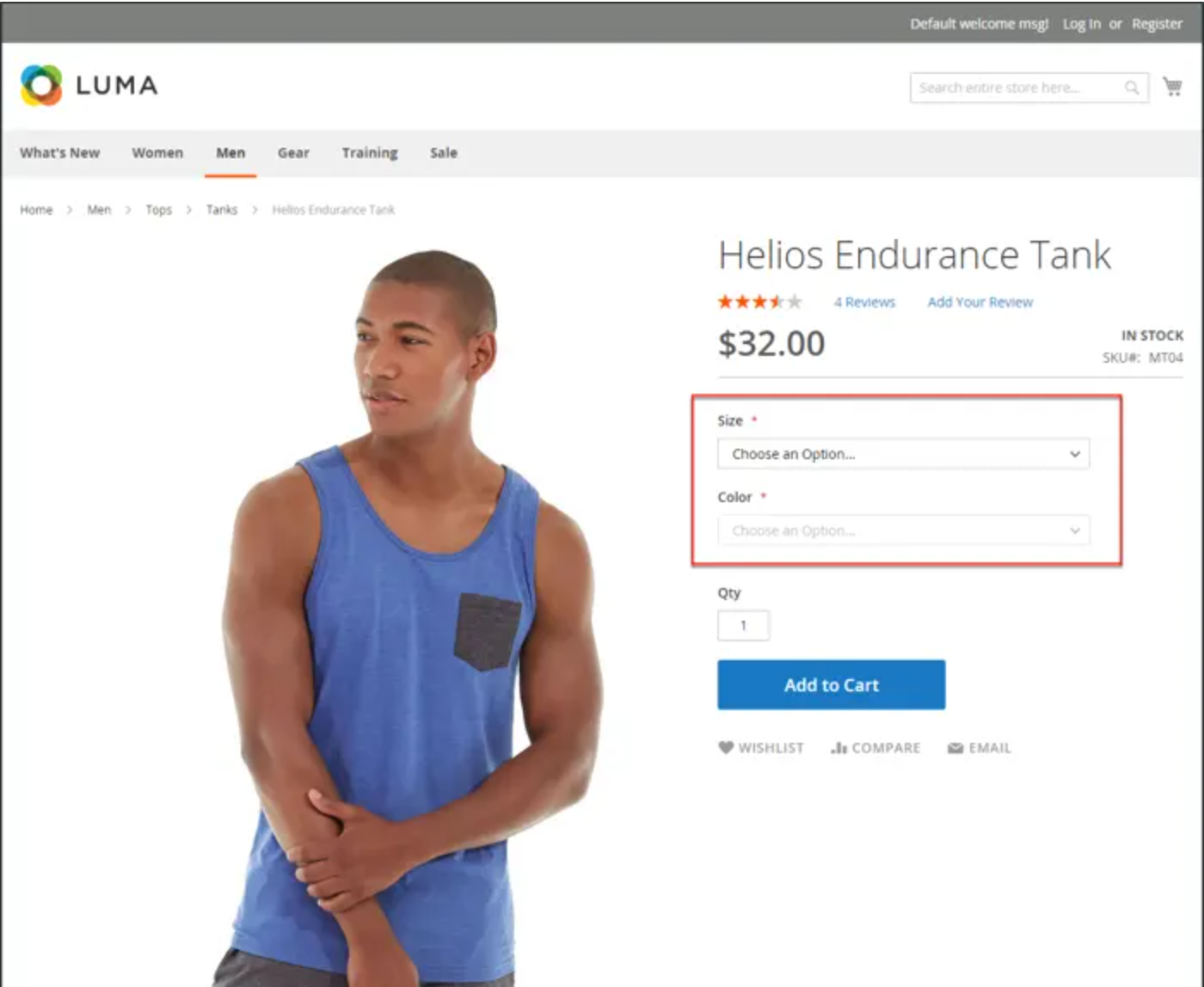
The apps that extend it. When native attributes run out, the Magento marketplace carries mature configurator extensions. Amasty and Mirasvit both ship visual configurator and parts-finder extensions with rule support, and the open-source Custom Product Builder adds a build-your-own flow with live preview. These cover visual customization and guided selection for stores that want to stay on native Magento.
Where Magento breaks down. Two pressures push a Magento store past its apps. The first is performance and cost: as attribute sets and catalog size grow, page generation and admin operations slow, and the engineering to keep it fast is where Magento gets expensive. The second is dependency depth: native attribute logic handles selection, and rules where one choice rewrites the entire downstream option tree usually need custom development. Optimum7 has documented how the platform’s running cost surprises teams in the reasons Magento is costing you more than you think.
BigCommerce product configurator: 600 variants, unlimited rules, and where custom takes over
BigCommerce handles rule-based configuration better than most hosted platforms, and it is where Optimum7 has shipped its most complex configurators. The platform splits configuration into two tools: variants, which are true SKUs with inventory, and modifiers, which are option fields that carry pricing and weight rules. That split decides what you can build on BigCommerce without custom code.
Variants versus modifiers. A product can hold up to 600 variant combinations, each a discrete SKU with its own stock record. Modifiers are unlimited, and modifier rules can add or subtract price and weight when an option is chosen, which is enough to price many custom products. The catch: a modifier carries no SKU, so it cannot hold inventory. A catalog that needs both deep option depth and per-option stock tracking runs into that boundary quickly.
The apps that extend it. For visual and made-to-order customization, Zakeke provides 3D and web-to-print configuration, the KR Customizer app handles real-time text and image personalization, and Inkybay serves product-design and print workflows. These cover personalization and simple build-your-own without custom code.
Where custom takes over. Two conditions push a BigCommerce store to a custom build: inventory that must track at the option level past what modifiers allow, and catalogs whose combinations exceed the 600-variant cap. OmnimaxParts hit the second on its B2B catalog, where Optimum7 designed the variant structure ahead of import to respect BigCommerce’s per-product limits while preserving five customer pricing tiers. Orange Coast Pneumatics went further, running 11,300+ products with 560,000+ variations behind a custom Part Builder that resolves a valid part number from dropdown selections, well beyond anything a stock variant model holds.
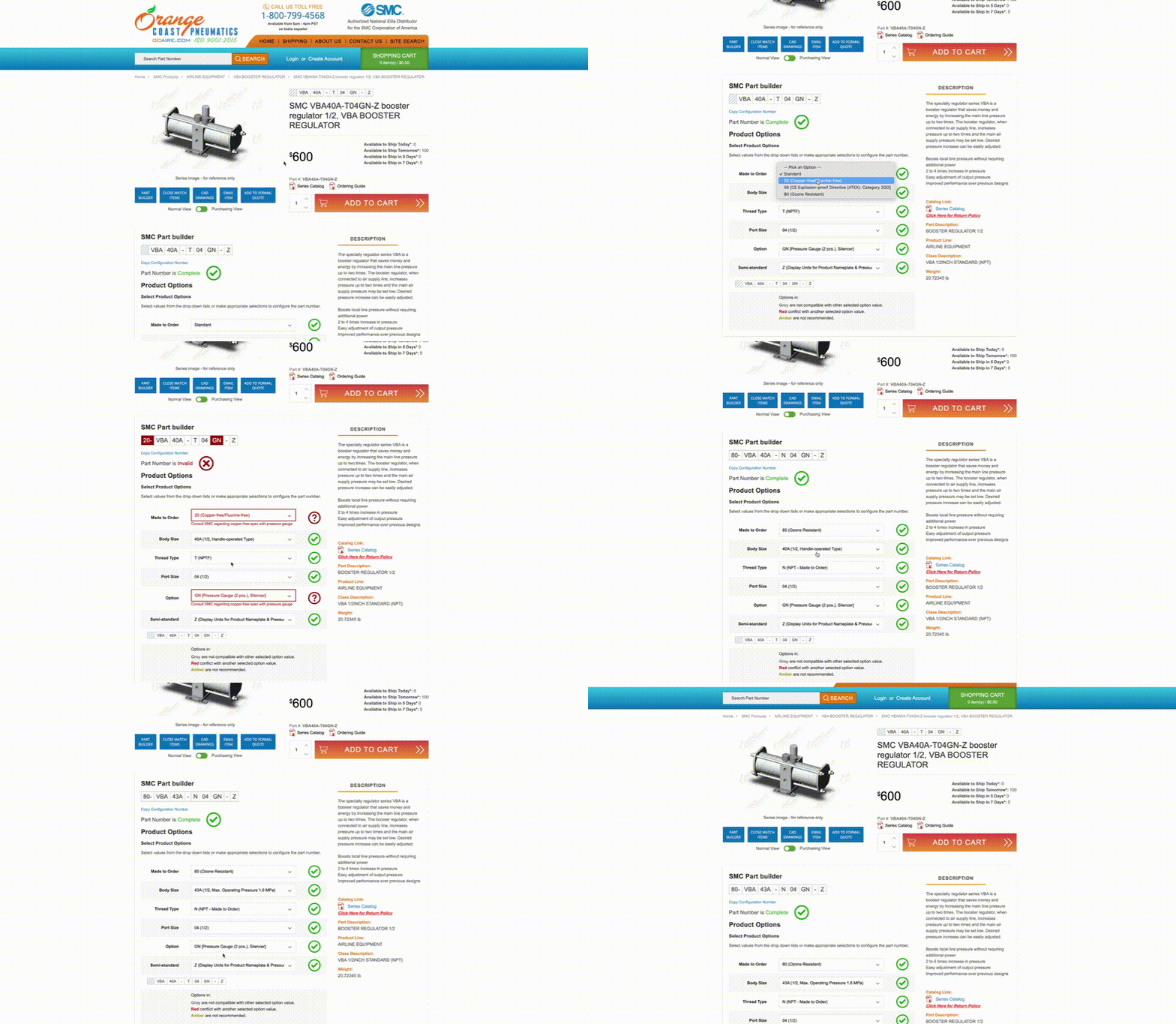
When the configurator is built well, the operational payoff is measurable. Marine Sanitation & Supply, a Seattle marine parts seller, saw conversion and organic revenue climb after Optimum7 replaced a legacy setup that forced buyers to call in to confirm the right part.
The same pattern holds across other BigCommerce builds where selection complexity was the core problem.
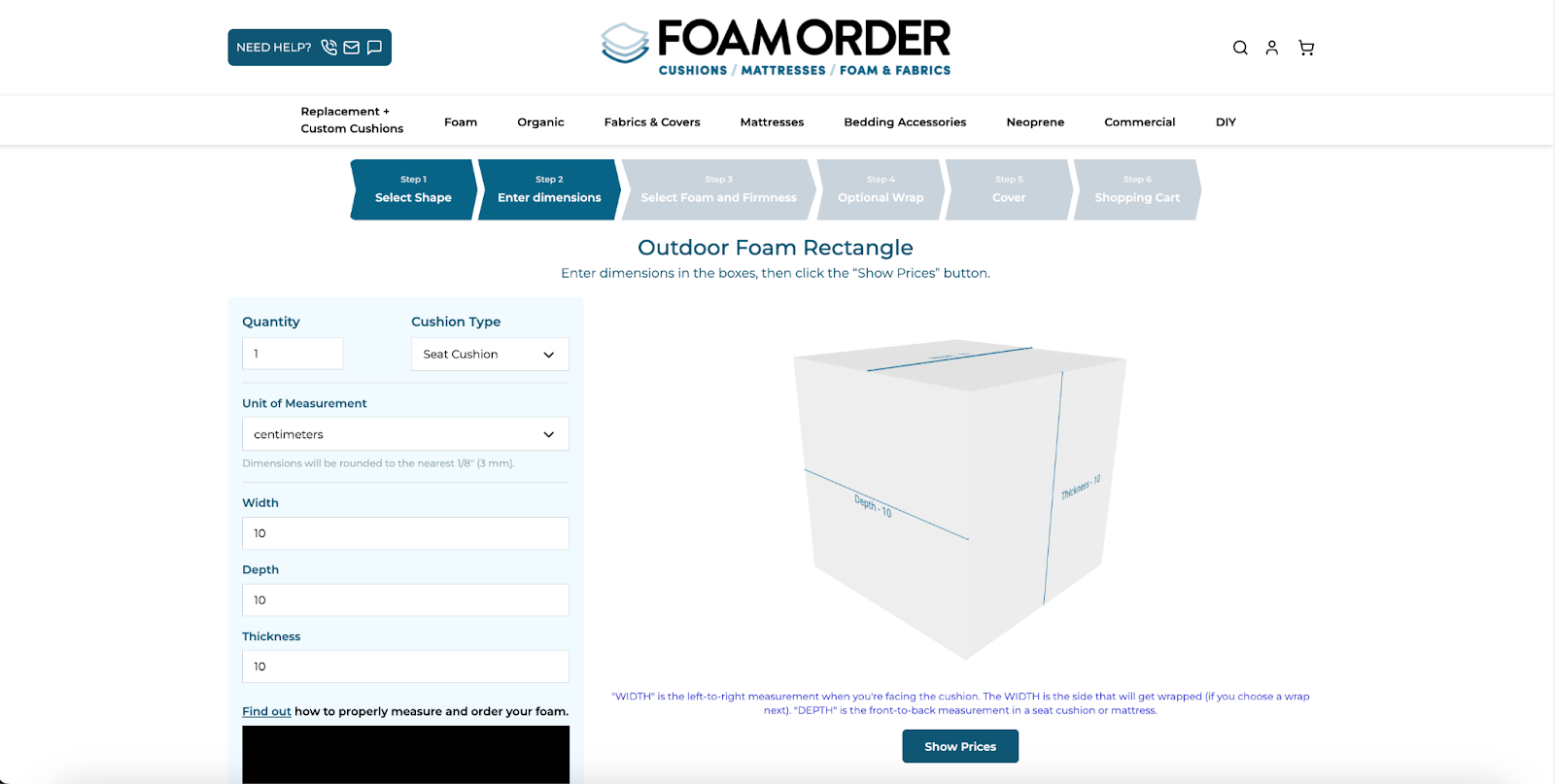
For the most demanding catalogs, Optimum7 runs BigCommerce as a headless backend behind a custom frontend. FoamOrder configures fully made-to-order foam by dimension, foam type, firmness, wrap layers, and fabric through a seven-step flow with a live 3D preview, built on BigCommerce APIs with a headless BigCommerce architecture when the storefront needs to move past theme constraints.
Shopify product configurator: apps and custom builds under the three-option limit
Shopify is built for a fixed variant catalog, which makes real product configuration an app or custom-build decision from the start. In October 2025 Shopify raised the variant ceiling from 100 to 2,048 variants per product, but the limit that matters for configuration held firm: a product still supports a maximum of three options, such as size, color, and material.
The model matters more than the count. Shopify variants are precomputed combinations, each a discrete SKU, with no concept of a dependency rule where one selection changes which other selections are legal. A product that needs four or more option dimensions, conditional logic, or a price computed from dimensions sits outside what native variants express, regardless of the 2,048 ceiling.
The apps that extend it. Shopify’s app ecosystem is deep. Zakeke brings 3D and visual configuration, Kickflip (formerly Product Personalizer) handles build-your-own with live preview, and Custom Product Builder covers step-by-step option flows. For text and image personalization or a handful of extra options, an app is often the right first move on Shopify.
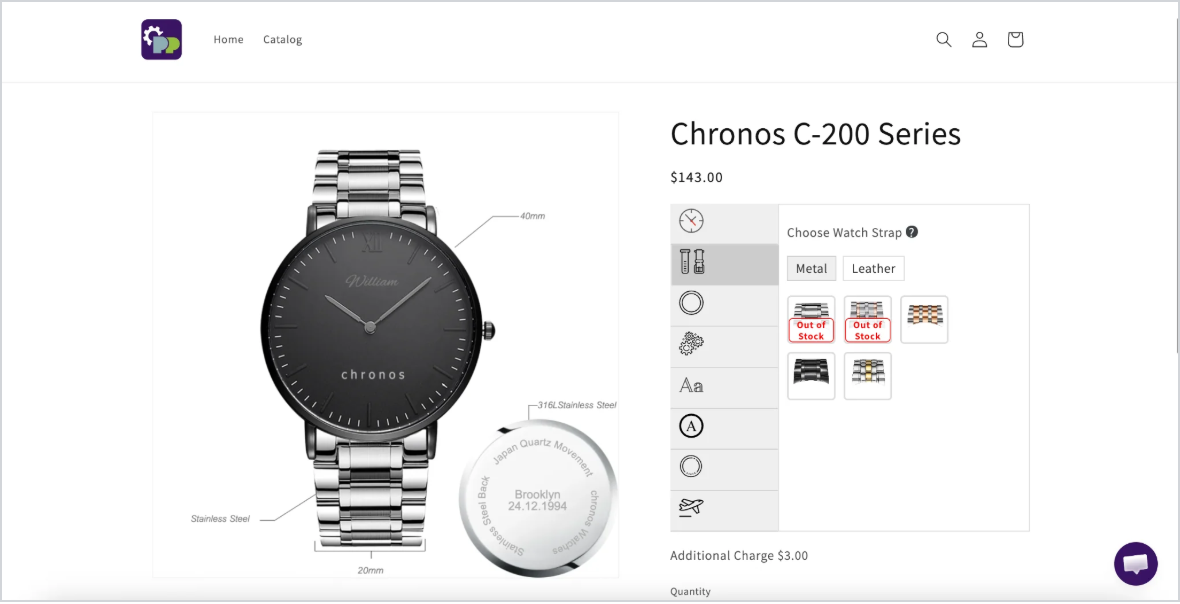
Where custom takes over. An app stops fitting when the configurator carries logic the business depends on: dependency rules, computed pricing, or a direct line to a manufacturing or ERP system. At that point a Shopify Plus build, often headless, moves the configuration logic into owned code that an app roadmap cannot gate.
Shopify Plus and headless for configuration at scale
Shopify Plus adds the headroom complex configuration needs: B2B catalogs with customer-specific pricing, scriptable checkout for purchasing rules, and the higher API limits a headless storefront depends on. For a made-to-order catalog with quoting or account-based pricing, the configurator logic lives in owned code on Shopify Plus, and the storefront reads it through the Storefront API.
A configurator promises live stock and a valid build, so the platform has to hold accurate inventory. Shopify stock that drifts from an ERP such as NetSuite is a common failure: the store offers a component the floor has already consumed. A configured catalog needs a real-time sync between Shopify and the ERP so the build a buyer configures matches what production can ship, and a nightly export is usually too slow to prevent oversells.
WooCommerce product configurator: plugin freedom you have to maintain
WooCommerce is the most flexible platform here and the one that asks the most of your team. As open-source software on WordPress, it configures products through variable products plus add-on plugins, with source-code access that puts almost no ceiling on what a developer can build. The cost of that freedom is ownership: hosting, performance, plugin conflicts, and security updates are all yours to manage.
What WooCommerce does. Variable products handle attribute-based variants, and plugins such as WooCommerce Product Add-Ons and dedicated product-configurator extensions add option fields, conditional logic, and price adjustments. For a store already on WordPress, this reaches moderate configuration depth at low licensing cost.
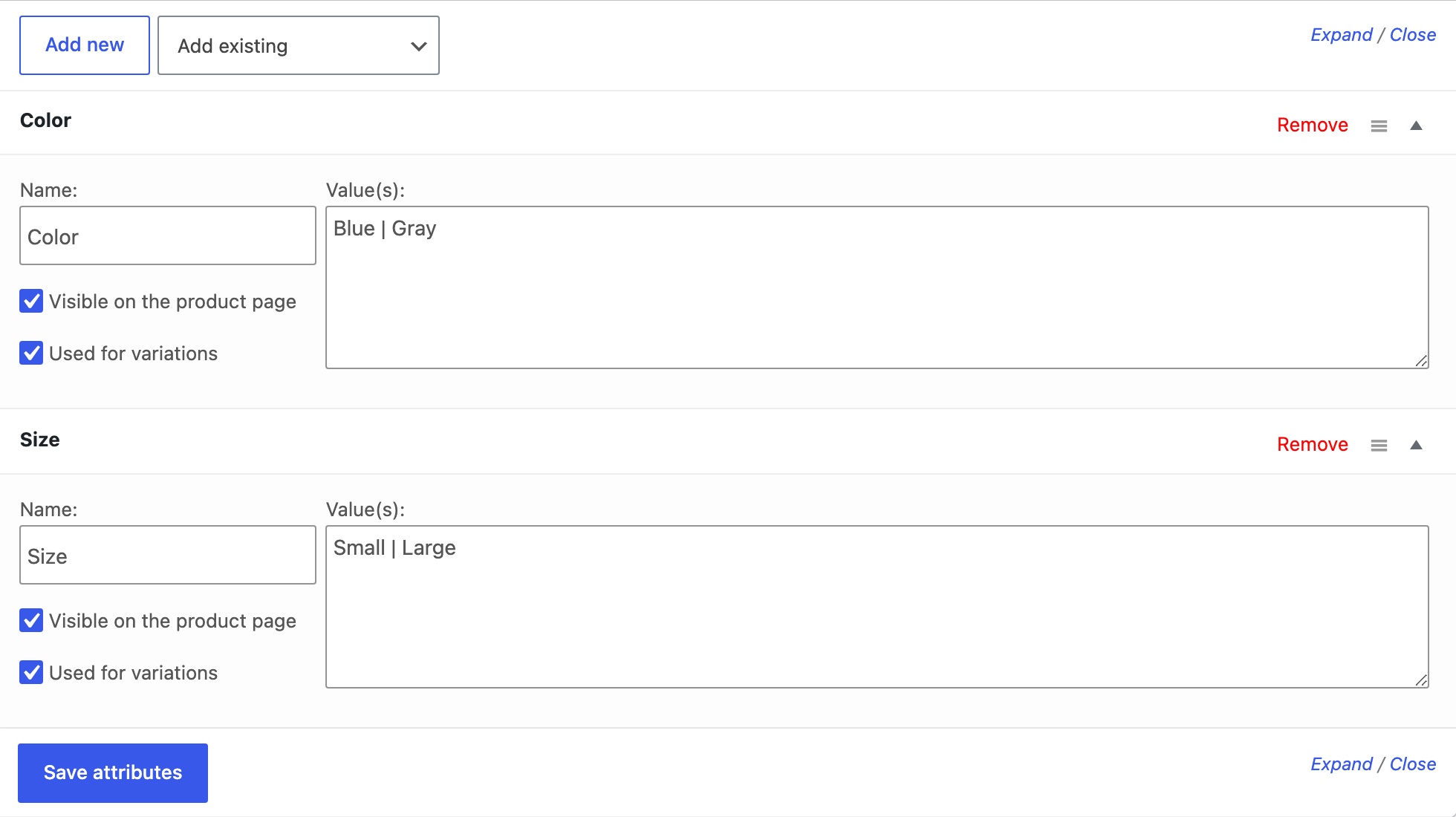
Where it strains. Configuration load and catalog size expose WooCommerce’s ceiling. Heavy variable products and stacked plugins slow the store, and each added extension is another maintenance and compatibility surface. A growing catalog often outgrows the setup: Moore Pet Supplies ran across WooCommerce and Volusion before Optimum7 consolidated roughly 9,600 products and its four sites onto BigCommerce for scalable search and catalog performance. WooCommerce rewards teams with development resources and punishes those without them.
High-SKU performance is the other ceiling. A large variable-product catalog multiplies database rows, and native WooCommerce search and filtering slow as the catalog grows into the tens of thousands of SKUs. Keeping a configured WooCommerce store fast at that size takes managed hosting, object caching, and usually a dedicated search index such as Elasticsearch, which is engineering the store owner funds.
PrestaShop, OpenCart, and other platforms
Smaller platforms draw real configurator demand too. PrestaShop and OpenCart both support product options natively and carry marketplace modules for configuration and personalization, and both are open-source, so a developer can extend them the way WooCommerce allows. The practical limits mirror WooCommerce: module quality varies, performance depends on hosting and code, and complex dependency logic or ERP-connected pricing points toward custom development. The platform matters less than the configuration requirement once a catalog is genuinely made-to-order.
Which platform should you choose if product configuration is core to your catalog?
For a business where configuration is central, the strongest fits are Adobe Commerce (Magento) for the deepest native configuration when you have the engineering budget to run it, and BigCommerce for rule-based pricing and headless custom builds at a lower total cost. Shopify Plus fits when configuration is contained and an app or a focused custom layer covers it, and WooCommerce fits teams with development resources who want full source control. Match the platform to the shape of the catalog.
For complex industrial and B2B product configuration specifically, the architecture question outweighs the platform brand. A catalog with tiered pricing, quoting, and deep dependency rules is usually served best by BigCommerce or Adobe Commerce with a custom configurator layer connected to the ERP, and comparing the platforms head to head is worth doing before committing. Optimum7 lays out that decision in BigCommerce versus Shopify Plus and, for the wider platform field, in the guide to choosing the best ecommerce platform. Teams building self-service ordering for distributors can go deeper in the B2B ecommerce platform guide.
When a configurator app stops being enough
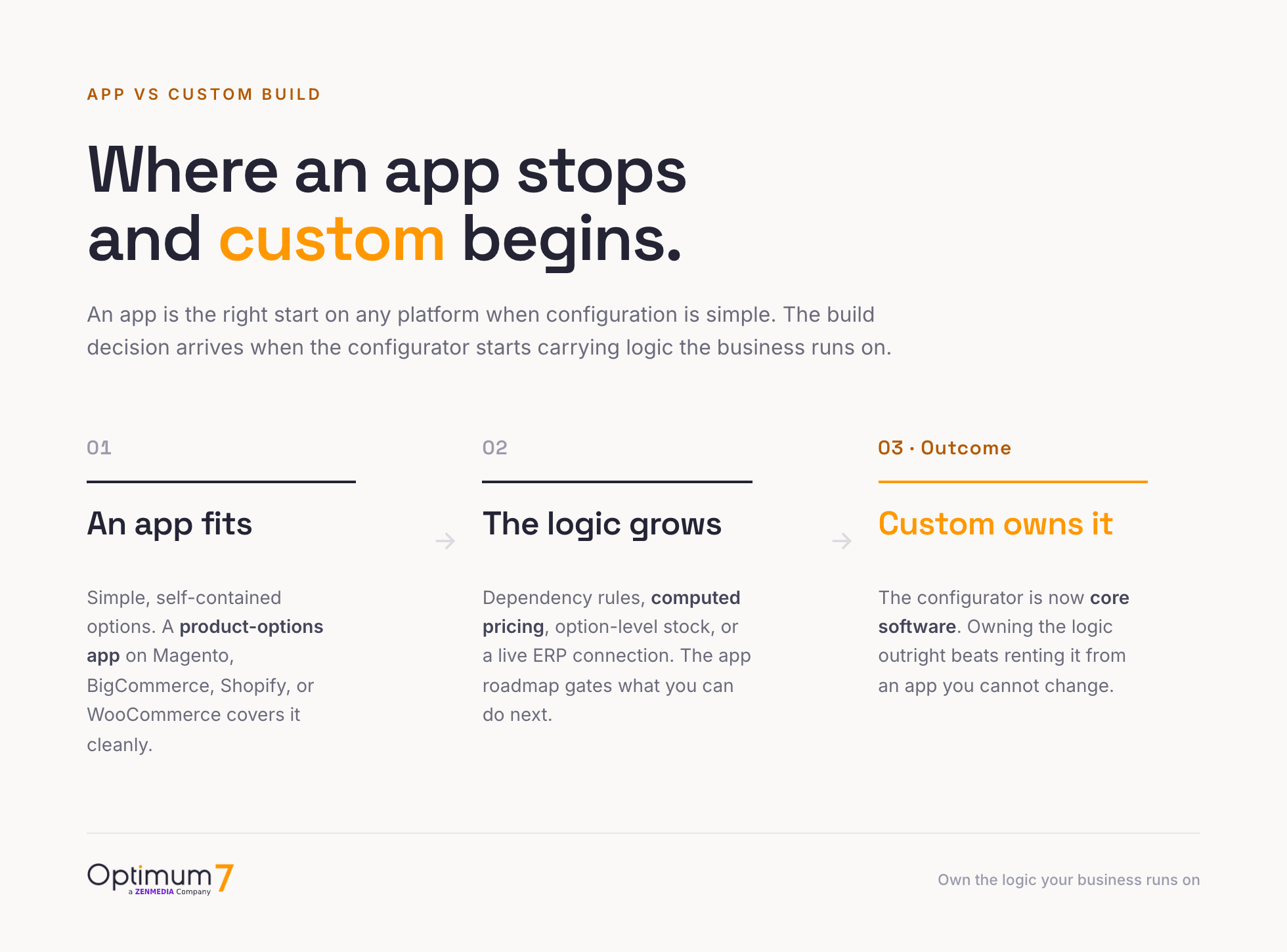
An app is the right start on any platform when configuration is simple and self-contained. It stops being enough when the configurator carries logic the business runs on: dependency rules that rewrite the option tree, pricing computed from components or dimensions, live stock at the option level, or a direct connection to an ERP or manufacturing system. At that point the configurator is core software, and renting it from an app roadmap becomes the risk. A custom ecommerce development engagement moves that logic into code you own. For what a custom build contains, what it costs, and how to vet the firm that builds it, the ecommerce product configurator guide covers the full scope.
Frequently Asked Questions
Which ecommerce platform is best for a product configurator?
Adobe Commerce (Magento) offers the deepest native configuration when you can fund the engineering to run it, and BigCommerce is the strongest fit for rule-based pricing and headless custom builds at lower cost. Shopify Plus works when configuration is contained; WooCommerce suits teams with in-house developers. For complex industrial catalogs, BigCommerce or Adobe Commerce with a custom configurator layer wins.
Does Shopify have a product configurator?
Shopify has no native configurator. It supports up to 2,048 variants but only three options per product, so real configuration comes from apps such as Zakeke, Kickflip, and Custom Product Builder, or a custom Shopify Plus build. Products needing more than three option dimensions, conditional logic, or computed pricing need one of those routes.
Can Shopify Plus handle B2B product configuration with custom pricing?
Shopify Plus supports B2B catalogs with customer-specific pricing, price lists, and scriptable checkout for purchasing rules. A configured B2B product with quoting or account-based pricing usually runs as a custom or headless build on Shopify Plus, with the configurator logic in owned code and the storefront reading it through the Storefront API. Native variants alone cannot express that logic.
What is the best Magento product configurator?
Magento covers a lot natively through configurable, bundled, grouped, and custom-options product types. When those run out, mature extensions from Amasty and Mirasvit add visual configuration and parts-finder logic, and the open-source Custom Product Builder adds a build-your-own flow. Deep dependency rules or component pricing usually justify a custom configurator over an extension.
Can BigCommerce handle complex product configuration?
Yes, within limits. BigCommerce supports up to 600 variant combinations per product plus unlimited modifiers whose rules adjust price and weight, which covers many custom products. Modifiers cannot hold inventory, so catalogs needing option-level stock or more than 600 combinations move to a custom build. Optimum7 has run BigCommerce configurators handling hundreds of thousands of part variations this way.
Does WooCommerce have a product configurator?
WooCommerce configures products through variable products plus plugins such as WooCommerce Product Add-Ons and dedicated configurator extensions. Because it is open-source, a developer can extend it with almost no ceiling. The trade-off is ownership: hosting, performance, plugin conflicts, and maintenance all fall to your team, which matters most as the catalog and configuration load grow.
Can WooCommerce handle thousands of configurable products?
It can, with engineering. Native product search and filtering slow as a variable-product catalog grows into the tens of thousands of SKUs, so a large configured WooCommerce store needs managed hosting, object caching, and usually a dedicated search index such as Elasticsearch. The flexibility is real; the performance work is the owner’s to fund.
Should I use an app or build a custom product configurator?
Start with an app when configuration is simple and self-contained. Build custom when the configurator carries dependency rules, computed pricing, option-level inventory, or an ERP connection, because owning that logic outright beats renting it from an app roadmap. The full build-versus-buy breakdown, including cost and vetting, is in the ecommerce product configurator guide.
About the author: Duran Inci is the CEO and Co-Founder of Optimum7, an ecommerce development and digital marketing agency. He helps mid-market and enterprise brands scale revenue through conversion optimization, SEO, and custom ecommerce solutions.