



Did you know the average company wastes almost thirty percent of its SaaS budget without realizing it? It usually starts small. A free trial from two years ago silently converts. A design tool someone used once renews on your credit card. An annual license auto-charges even though the original buyer left the company months ago.
This quiet pattern of unnoticed renewals is how most companies lose thousands of dollars every year. Because there is no system that forces anyone to review what is about to renew. Subscriptions renew on autopilot, but accountability does not.
That is why automated renewal management has become essential. By creating a system that surfaces every upcoming charge before it happens, you stop paying for tools you do not use. It is one of the simplest ways to reduce SaaS spend, clean up your software stack, and eliminate hidden waste that adds up month after month.
Why SaaS Spending Gets Out of Control
Most companies do not overspend on software because they are careless. They overspend because subscriptions renew quietly in the background, and no one sees the full picture. The result is predictable: tools pile up, renewals slip through unnoticed, and budgets expand long before anyone realizes what is happening.
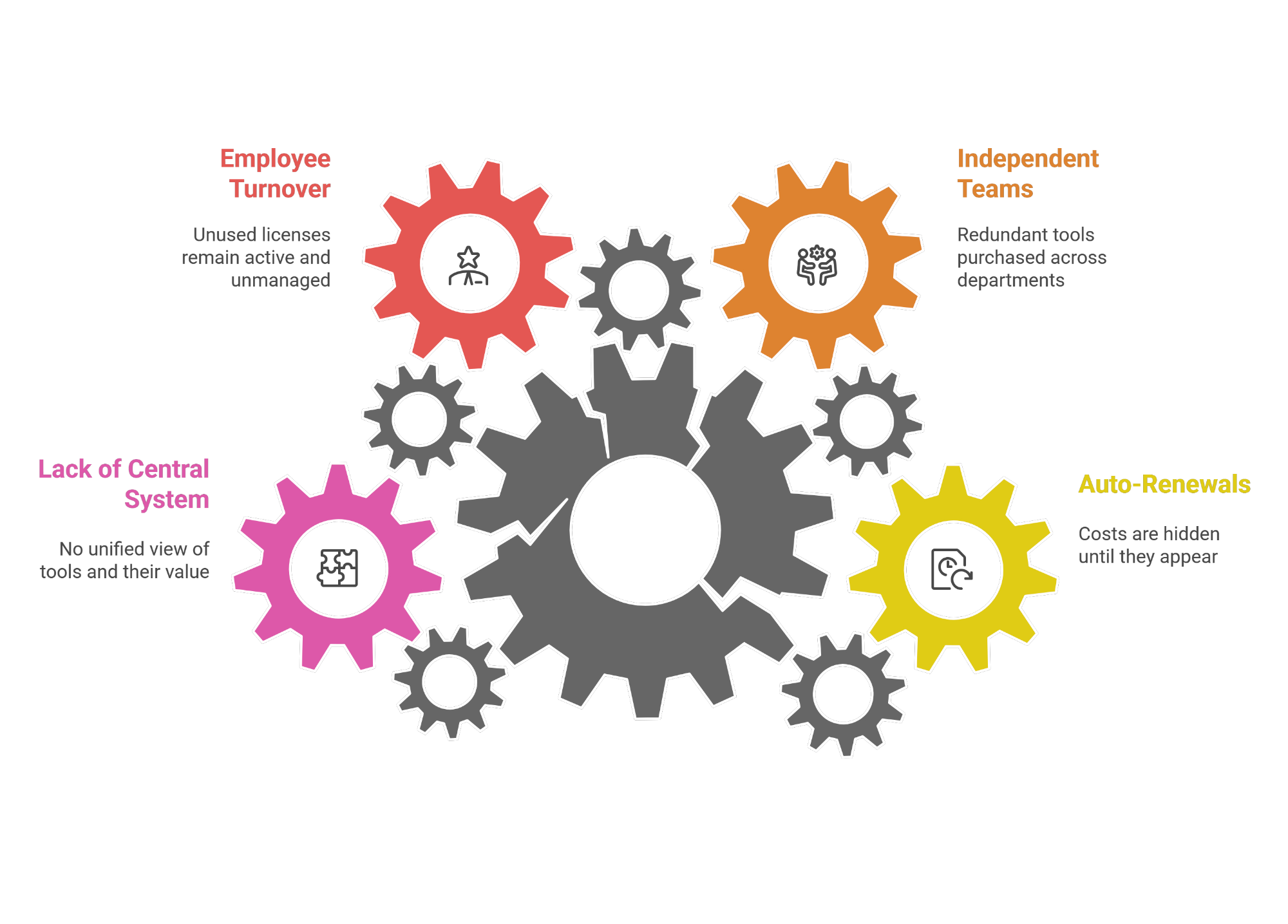
Several factors contribute to this problem:
1. Auto-Renewals Hide Real Costs
Nearly every SaaS product renews automatically. The moment you check that box at signup, the clock starts, and charges repeat indefinitely. Unless someone reviews each subscription ahead of time, the cost stays invisible until it appears on a statement.
2. Teams Buy Tools Independently
Marketing buys one platform. Sales buys another. Operations and Product buy their own. Because teams move fast, they choose tools as they need them, not as part of a coordinated strategy. Over time, the organization ends up paying for multiple tools that do the same thing.
3. Employee Turnover Removes Accountability
People leave. Projects end. Ownership changes. What does not change is the subscription. Licenses stay active even when the original user is gone. Nobody is assigned to review the tool, so the renewal simply continues.
4. No Single Source of Truth
Finance sees the charges, but not the usage. IT sees accounts, but not the value. Leadership sees budgets but not what each subscription actually does. Without one unified system that tracks every tool, renewals blend into the background.
This is how subscription waste accumulates slowly and consistently. It is not a dramatic problem; it is a quiet one. And quiet problems are the most expensive because they go unnoticed the longest.
The Hidden Cost of Subscription Waste and the Visibility Gap Behind It
Subscription waste is not just a budgeting issue; it is a structural problem that grows quietly inside every company. Most teams notice the financial impact first, however the deeper cost comes from how invisible these renewals become once they slip into the background. When no one sees the full picture, accountability disappears, and subscriptions continue long after their value has faded.
The financial loss is the easiest to measure. A mid-size company can lose tens of thousands of dollars each year on tools that no one uses or remembers approving. These charges are small on their own, but they compound month after month because renewals happen automatically while people change roles, projects end, and ownership drifts.
The operational cost is harder to see but just as damaging. Finance teams spend unnecessary hours tracking down unexpected charges and explaining line items that no one recognizes. IT inherits abandoned accounts that still hold active credentials. Department leads struggle to understand which tools their teams actually rely on. Each of these gaps slows decision-making and creates persistent friction across the organization.
There is also a growing security risk. Every unused subscription represents a set of credentials and access points that no one monitors. When former employees keep access or old accounts remain active, the attack surface expands quietly. These forgotten tools become weak points that never appear in routine reviews.
All of this stems from one core issue: a visibility gap. Renewals happen automatically, information sits in scattered places, and ownership is rarely updated when people leave. Finance sees the charges only after they appear. IT manages access but cannot judge value. Department leads remember the tools they use daily, but not the ones they tried during a single project months earlier. Leadership sees the total spend but not the justification behind each subscription.
Manual tracking cannot fix this. Spreadsheets, calendar reminders, and inbox searches all fall apart the moment a new tool is added without being logged, a renewal email gets ignored, or an employee leaves without transferring ownership. Human memory cannot keep pace with automated renewals.
Without a clear source of truth and a predictable review moment, every subscription becomes a permanent recurring charge. Renewals repeat by default, while responsibility remains scattered. This is the real cost of subscription waste. It is not just the money; it is the loss of visibility. Once visibility disappears, control follows, and costs grow faster than anyone realizes.
Introducing a Simple System That Finally Puts SaaS Renewals Under Control
Once companies understand how subscription waste happens, the next question is always the same: how do we stop it without adding more work or buying another expensive platform? The answer is to turn renewals into a predictable, automated process that brings every upcoming charge into the open before it hits your account.
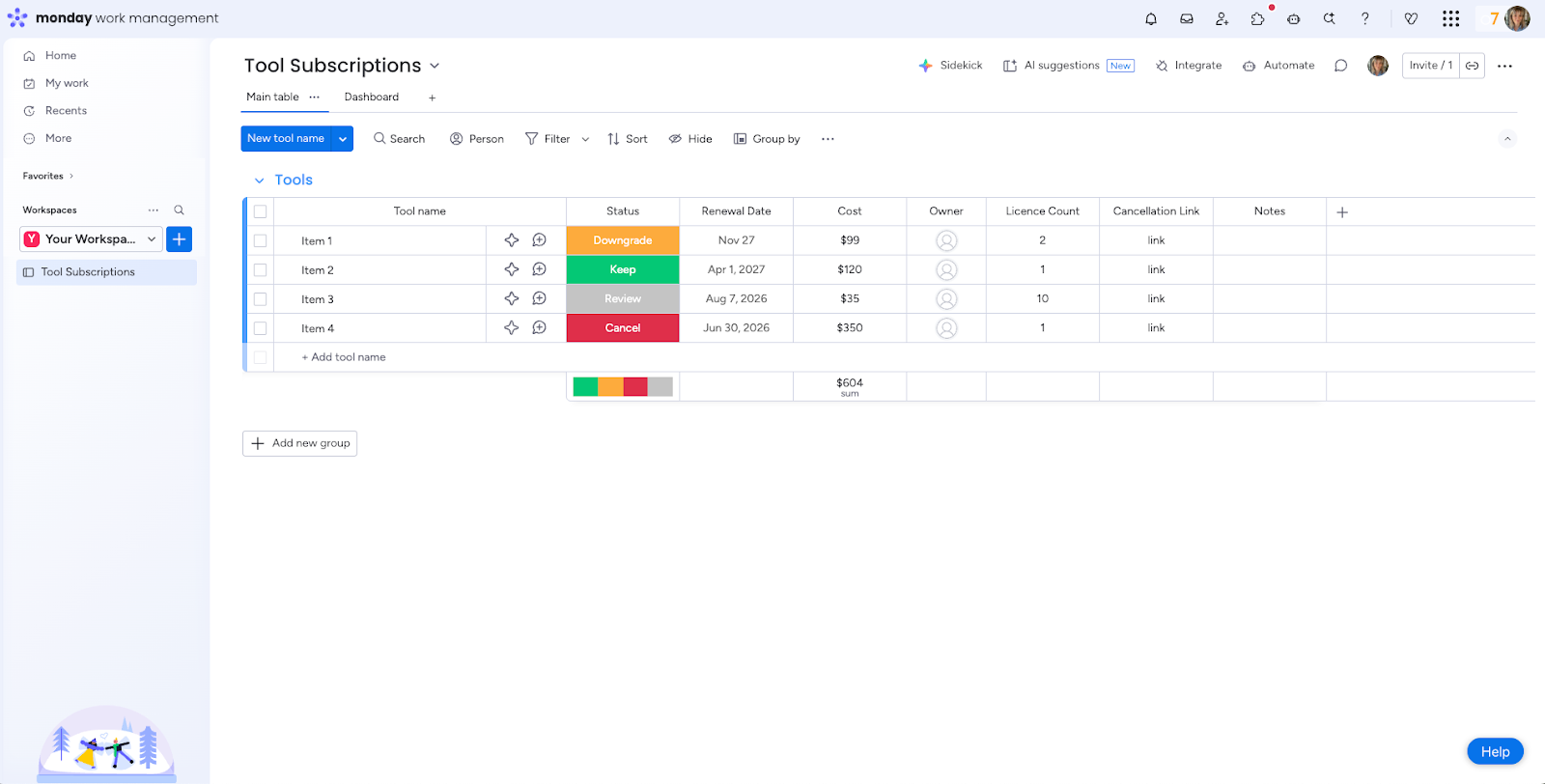
The solution is a lightweight SaaS Renewal Management System that connects Monday.com, n8n, and Google Calendar. Each tool plays a simple role. Monday.com becomes your source of truth for every subscription. n8n handles the timing and logic. Google Calendar shows the reminders at the exact moment someone needs to make a decision.
The goal is not to overwhelm teams with dashboards or replace the tools they already use. The goal is to build a system that forces visibility. When every renewal surfaces early, the company stops paying for software it has forgotten. Every tool must prove its value or it gets removed before it consumes more budget.
This setup works because it corrects the root problem: renewals become intentional instead of automatic. Teams see what is coming, understand who owns each tool, and evaluate the cost before the card is charged. What used to be a chaotic pattern of surprises becomes a controlled, predictable workflow.
In a world where software spending grows faster than most budgets, this simple system gives companies something they rarely have: clarity before the invoice arrives.
Core Features That Make SaaS Renewal Automation Work
The strength of this system comes from how reliably it organizes subscription data and brings renewals to the surface before they charge. Most companies never see the full picture of their software stack until everything is in one place, and once that visibility appears, unnecessary costs become impossible to ignore.
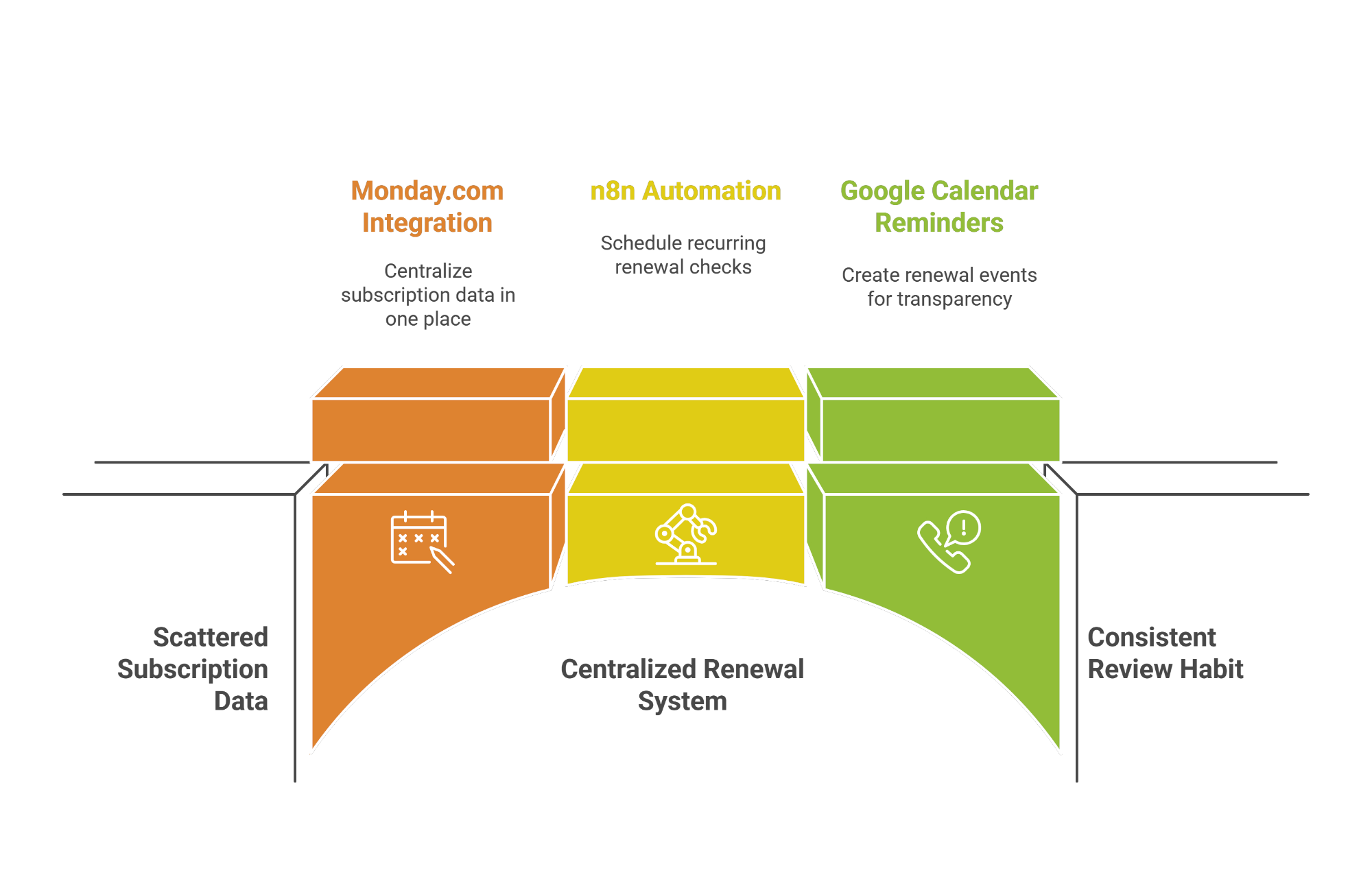
The system starts with Monday.com as the central source of truth. Every subscription lives in a single board that lists renewal dates, costs, owners, license counts, and notes. This alone exposes unused tools, forgotten seats, and duplicate categories. When information is scattered across emails and credit card statements, waste hides. When it is centralized, it becomes clear.
n8n adds structure to that visibility. It checks your subscription list on a recurring schedule and looks ahead thirty to sixty days for upcoming renewals. This timing window gives teams enough space to review tools, compare alternatives, or negotiate lower rates. Nothing slips through simply because someone forgot to check.
Google Calendar completes the system by creating renewal events two weeks before charges occur. Each event contains the tool name, renewal date, cost, owner, license count, and cancellation link. Both the owner and finance receive the reminder, which creates transparency and shared accountability across teams.
These features work together to replace guesswork with a consistent review habit. Renewals are no longer background noise that only finance notices. They become visible, scheduled decisions that each department understands and takes responsibility for. Over time, this structure reshapes how companies manage software and reduces waste across the entire stack.
The Real ROI of Automated SaaS Renewal Management
Most companies notice the benefits of this system within the first month. The surprise charges stop. Duplicate tools get flagged instantly. Unused licenses disappear. The moment renewals become visible, costs start dropping.
Most organizations save between 15-30% of their annual software spend simply by reviewing renewals before they charge. Those savings come from common patterns: tools that are no longer used, overlapping subscriptions across departments, seats assigned to former employees, and trial plans that quietly converted to paid.
The financial impact is only one part of the ROI. Finance teams get accurate forecasting instead of guessing which renewals are coming up. Department leads make better decisions because they see upcoming software costs before they hit the card. Leadership finally gets a clear view of the full stack and can plan budgets with real numbers instead of assumptions.
Security improves as well. Cancelling unused tools removes abandoned accounts with active credentials, something that is often overlooked but presents real risk for any organization. The system helps reduce exposure simply by making sure every tool has an owner and a purpose.
The long-term value is predictability. Software spending becomes intentional instead of reactive, and every renewal becomes a decision, not a surprise. This is the shift that turns a chaotic SaaS stack into a clean, controlled, and cost-efficient system.
The Long-Term Benefits of Building Renewal Discipline
Once renewal reviews become part of your normal workflow, the benefits compound quickly. Cost savings are usually the first visible win, but the deeper advantage is how much smoother and more predictable your operations become.
A consistent renewal process brings structure to the entire software stack. Teams become more intentional about the tools they buy because they know renewals will not slip through unnoticed. Finance finally gains reliable forecasting, which makes budgeting easier and eliminates surprises. IT sees fewer abandoned accounts and reduces security risks that come from tools no one actually uses. Leadership gets a clean view of which tools create real value and which ones can be removed.
Over time, this discipline improves decision-making. When every subscription must be reviewed, teams naturally start checking usage, comparing overlapping tools, and identifying where the stack can be simplified. Duplicate platforms disappear. Expensive tools get replaced with more efficient ones. Departments stop purchasing software that already exists elsewhere.
As your company grows, this structure becomes even more important. More employees lead to more tools, more trials, and more renewals. Without a system, the problem multiplies. With a system, everything scales gracefully, and spending stays controlled.
In the long run, renewal discipline creates a healthier operational culture. People become more aware of what they use, why they use it, and how it contributes to the larger workflow. Waste decreases, clarity increases, and software spending becomes a strategic choice instead of a recurring surprise.
Turning Awareness Into Real Savings
Software waste hides in plain sight. It lives inside the free trial that turned into a paid plan, the license assigned to someone who left six months ago, the tool nobody remembers approving but continues to renew every year. None of it feels urgent until you finally see how much of your budget is tied to subscriptions that no one actually uses. The problem does not grow because teams are careless. It grows because the renewals happen quietly, and the visibility arrives too late.
A renewal management system fixes the problem by putting every subscription on the table before it charges. Once the company has early visibility, decisions change immediately. Teams ask whether they still need a tool. Finance no longer chases unexplained line items. Duplicate platforms become obvious. Old licenses get closed out. The stack becomes something you evaluate, not something that accumulates in the background.
The power of this system is its timing. It creates the moment that was missing, the moment when someone has to decide whether a subscription still deserves space in the budget. That single habit produces real savings. It sharpens accountability. It brings structure to something that used to be chaotic. And it gives leadership a level of clarity that most companies have never had.
If you want to build this system for your team or scale it across the entire organization, we can help you design it, automate it, and make it part of your monthly workflow.
Reach out and let us build it with you.