

TL;DR: Digital channels now account for 65% of industrial B2B revenue, up from 38% in 2020. Manufacturers and distributors that automate order management, pricing, and ERP integration report 167% ROI over three years (Forrester via BigCommerce). This guide covers the functionalities, integrations, platforms, and implementation roadmap for B2B ecommerce automation that actually scales.
B2B ecommerce automation is no longer an upgrade for industrial companies with mature digital operations. It is the baseline infrastructure that determines whether your sales team can scale without adding headcount, whether your largest accounts can self-serve without calling a rep, and whether your order processing costs stay defensible as volume grows. Optimum7 has built and automated ecommerce operations for over 1,000 B2B companies, from manufacturers doing $10M annually to distributors processing tens of thousands of SKUs across multiple warehouses. The patterns that work, and the ones that do not, are consistent.
This guide covers what B2B ecommerce automation requires at the platform, integration, and operations level, what industrial companies most commonly get wrong, and how to sequence a 90-day implementation that delivers working infrastructure rather than a partially-built system.
Why B2B eCommerce Automation Is Now a Competitive Requirement
The industrial B2B buying process has changed faster over the past five years than in the previous fifty. Millennials now make up 73% of all B2B buyers and 44% of final purchasing decision-makers. They grew up with consumer ecommerce and bring those expectations to every procurement interaction. When a buyer can place a 200-line order on Amazon Business in four minutes, a phone-and-fax process or a clunky portal that requires a rep to quote every order loses the account because the buying experience is too costly for the buyer to maintain, regardless of product quality.
The market reflects this. U.S. B2B sales topped $15 trillion in 2025, with digital channels absorbing an increasing share of that volume every quarter. Digital channels now account for 65% of industrial B2B revenue, up from 38% in 2020. That growth is not coming from new markets; it is existing accounts migrating from manual ordering to self-service digital channels. Companies that built the infrastructure to support that migration captured the volume. Those that did not watched revenue erode without a clear explanation on any single call.
Digital Channel Share of Industrial B2B Revenue
Source: Digital Commerce 360, 2026
2020
38%
2025
65%
Digital channel adoption in industrial B2B has grown 71% in five years.
Core Functionalities Every Industrial B2B Platform Needs
Consumer ecommerce platforms and B2B industrial platforms are not the same product. A Shopify store configured for DTC works by listing products at public prices, accepting a credit card, and shipping to one address. A B2B industrial platform must handle account hierarchies with multiple buyers per company, customer-specific pricing that matches ERP contracts, purchase orders with net terms, minimum order quantities at the line and order level, multi-location shipping to different ship-to addresses under one account, and custom workflows for products that require configuration or have long production lead times. The table below shows the core functional requirements that separate a real B2B platform from a consumer platform with a login screen added.
| Functionality | What It Does | Why It Matters for Industrial B2B |
|---|---|---|
| Customer-Specific Pricing | Each account sees contract-negotiated prices, not list price | Industrial distributors routinely have hundreds of unique price lists across accounts |
| Account Hierarchy | Parent company with multiple buyer sub-accounts and ship-to locations | Enterprise accounts have multiple buyers, locations, and approval workflows |
| Net Terms and Credit Limits | Net 30/60/90 payment terms with credit limit enforcement at checkout | B2B buyers expect invoicing, not forced credit card payment at checkout |
| ERP Integration | Live sync of inventory, orders, pricing, and customer data with SAP, NetSuite, Epicor, etc. | Eliminates double entry and keeps storefront data accurate in real time |
| EDI / XML Order Exchange | Automated PO ingestion and acknowledgment with trading partners | Required to serve large retail and distribution accounts with EDI procurement systems |
| Minimum Order Rules | MOQ enforcement at product, category, and order level | Prevents unprofitable small orders from consuming fulfillment capacity |
| RFQ and Quote Management | Buyers request quotes online; sales converts and sends back a locked cart | Moves the quote process into the digital channel rather than email chains |
| Configure-to-Order Workflows | Product configurator with option validation, pricing logic, and lead time display | Essential for manufacturers with customizable or build-to-order products |
| Multi-Location Shipping | Single order shipped to multiple addresses with per-address tracking | Distributors and national accounts require split shipments across facilities |
ERP, EDI, and System Integration
The integration layer is where most B2B ecommerce projects succeed or fail. A storefront without a live ERP connection is a static catalog with a checkout bolted on. It does not reflect real inventory, does not enforce customer-specific pricing from contracts, and does not create orders in the system of record. Every order placed requires manual re-entry, which defeats the purpose of automation and introduces the error rates that drive churn.
ERP integration connects the storefront to your core business system, whether that is SAP, NetSuite, Epicor, Infor, or a legacy ERP, through an API layer or middleware connector. When a buyer places an order, the integration creates the order in the ERP automatically, pulls live pricing from the customer price list, deducts inventory, and pushes shipment and tracking data back to the storefront. The buyer gets accurate information at every stage without a rep touching the transaction.
EDI integration sits alongside the ERP layer for companies that serve large retail or distribution accounts with EDI procurement systems. EDI standards (850 for purchase orders, 855 for acknowledgment, 856 for advance ship notices, 810 for invoices) must be translated between your internal systems and each trading partner’s requirements. An ecommerce platform without EDI capability is structurally excluded from enterprise accounts that require it.
Customer-Specific Pricing and Catalog Management
Industrial B2B companies typically maintain dozens or hundreds of distinct price lists. A national distributor may have a base price list, a regional price list, volume tiers, and contract overrides for top accounts, all for the same SKU. Managing this in a spreadsheet or manually updating the storefront is operationally untenable above a few hundred accounts. The storefront must pull prices dynamically from the ERP or a connected pricing engine, keyed to the logged-in buyer’s account ID.
Catalog visibility follows the same logic. Not every buyer should see every product. A distributor who sells to automotive OEMs and to independent auto repair shops has entirely different catalog needs for each segment. Logged-in accounts should see only the products available to their segment, at their contracted prices, with their approved payment methods and shipping destinations pre-populated. The experience should feel like the platform was built for their account specifically.
Reorder automation is the direct benefit of solid catalog and pricing infrastructure. When a buyer’s order history, their price list, and their approved ship-to locations are all accessible in the portal, a single-click reorder becomes technically trivial to build. For buyers who reorder the same SKUs on a recurring cycle, a subscription or standing order feature eliminates the reorder entirely. These are not premium features. They are the standard expectation from the millennial buyer who spends more time avoiding phone calls than placing them.
Building a B2B ecommerce operation and need the integration layer done right?
Optimum7 has connected ERP systems, EDI workflows, and B2B storefronts for over 1,000 industrial companies. Start with a strategy session.
Order Management and Fulfillment Automation
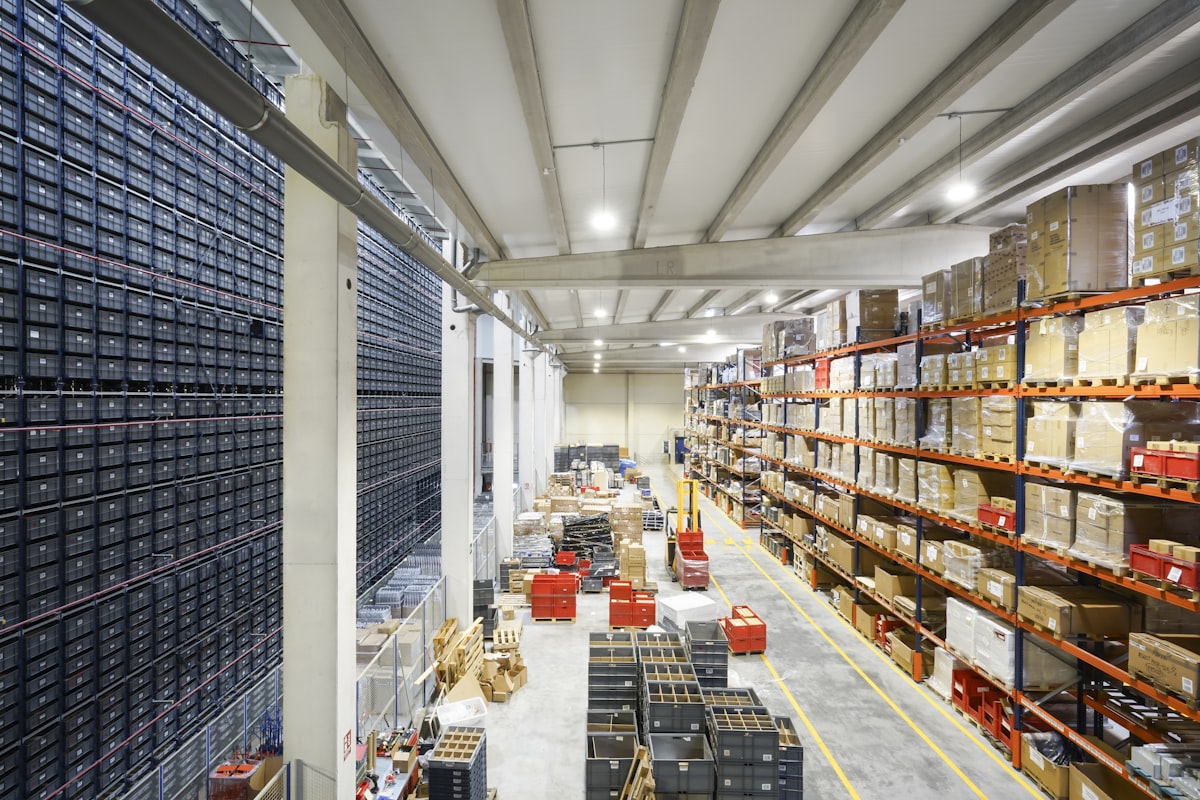
Manual order processing for B2B industrial companies costs between $25 and $100 per order in labor, error correction, and communication overhead. At 500 orders per month, that is $12,500 to $50,000 in processing cost before a single product ships. Automation platforms reduce that processing time from 15 to 30 minutes per order to under 30 seconds for standard orders, with no manual touchpoints. The ROI case for order automation is rarely about technology cost; it is about what $600,000 per year in manual processing overhead could fund instead.
Which Platform Should You Build Your B2B eCommerce On?
Platform selection for industrial B2B is a decision that determines your integration options, your total cost of ownership, and how much custom development you will need to build the functionality described above. The wrong platform choice does not become obvious until month eight of a project, when the team is writing workarounds for features the platform does not natively support.
| Platform | B2B Feature Depth | ERP Integration | EDI Support | Best For |
|---|---|---|---|---|
| BigCommerce B2B Edition | High: native price lists, account hierarchy, net terms, RFQ | Strong partner ecosystem (NetSuite, SAP, Epicor) | Via middleware partners | Mid-market distributors and manufacturers ($10M–$200M) |
| Shopify Plus | Moderate: improving B2B features, best for hybrid B2B/DTC | API-based; requires custom or third-party connector | Via third-party apps | Manufacturers selling to both wholesale and DTC channels |
| VTEX | High: built for complex B2B multi-country operations | Native connectors for enterprise ERPs | Strong native support | Enterprise manufacturers with multi-country and multi-entity complexity |
| OroCommerce | Very High: purpose-built B2B platform with CRM included | Native ERP integrations; strong API layer | Native EDI support | Large industrial distributors with complex procurement workflows |
BigCommerce B2B Edition is the platform Optimum7 most often recommends for mid-market industrial companies. Native support for customer-specific price lists, account hierarchies, net terms, and RFQ, combined with a strong ERP integration ecosystem and lower total cost of ownership than Magento, makes it the most defensible choice for companies between $10M and $200M in revenue. For manufacturers selling simultaneously to wholesale accounts and direct-to-consumer channels, Shopify Plus offers the strongest unified commerce architecture. Optimum7 builds on both. See our BigCommerce development capabilities for B2B-specific implementation details.
Common Pitfalls With B2B eCommerce Automation Projects
B2B ecommerce automation projects fail in predictable ways. The failure modes are not unique to any one industry or platform. They are the result of underestimating complexity, misaligning vendor capability with project scope, or trying to move faster than the data quality and organizational readiness allow.
Your 90-Day B2B eCommerce Automation Roadmap
A 90-to-120-day implementation timeline is realistic for a B2B ecommerce automation project with ERP integration and core order management functionality, provided the data is clean, the integration specs are defined, and the business objectives are agreed on before the first line of code is written. Timeline overruns are almost always caused by scope changes mid-project, ERP access delays, or data quality issues discovered after development starts.
The Optimum7 ecommerce development team has run this process across industrial manufacturers, national distributors, and B2B companies in construction, healthcare supply, safety equipment, and specialty chemicals. The projects that deliver on timeline share one characteristic: the business team and the development team aligned on scope before the project started, rather than discovering misalignment during testing.
Ready to automate your B2B ecommerce operations?
Optimum7 builds B2B ecommerce automation for industrial companies, distributors, and manufacturers. ERP integration, EDI, pricing automation, and order management, scoped and built to your operational reality.
Frequently Asked Questions
What is B2B ecommerce automation?
B2B ecommerce automation is the use of software integrations, workflows, and platform logic to eliminate manual steps in the ordering, fulfillment, pricing, and customer management processes. For industrial companies, this means connecting the ecommerce storefront to ERP systems, automating purchase order processing, enforcing customer-specific pricing rules, and routing orders without human intervention.
What functionalities does an industrial B2B ecommerce platform need?
Industrial B2B platforms need: customer-specific pricing and tiered catalogs, account hierarchy with multiple buyer accounts per company, ERP and inventory integration, EDI or XML order exchange, minimum order quantities, custom or configure-to-order workflows, net payment terms and credit limit enforcement, RFQ and quote management, and multi-location shipping with carrier routing logic.
How does ERP integration work with B2B ecommerce?
ERP integration connects your ecommerce platform to your core business system (SAP, NetSuite, Epicor, Infor, etc.) via API or middleware. When a customer places an order online, the integration automatically creates the order in the ERP, pulls live inventory, retrieves customer-specific pricing, and pushes shipping and fulfillment updates back to the storefront. This eliminates double data entry and keeps inventory and pricing accurate in real time.
What is EDI and why does it matter for B2B ecommerce?
EDI (Electronic Data Interchange) is the standardized electronic exchange of business documents such as purchase orders, invoices, and shipping notices between trading partners. Many large retailers, distributors, and manufacturers require EDI compliance as a condition of doing business. An ecommerce platform without EDI support cannot serve enterprise accounts that use EDI-based procurement systems.
Which platform is best for industrial B2B ecommerce?
BigCommerce B2B Edition is the most commonly recommended platform for mid-market industrial companies because of its native B2B features, strong ERP integration ecosystem, and lower total cost of ownership compared to Magento. Shopify Plus works well for manufacturers selling to both B2B and DTC channels simultaneously. VTEX and OroCommerce are enterprise-grade options for companies with complex multi-country or multi-warehouse requirements.
How long does a B2B ecommerce automation project take?
A standard B2B ecommerce automation project with ERP integration, customer-specific pricing, and core order management functionality typically takes 90 to 120 days from kickoff to launch. Complex projects involving EDI integrations, configure-to-order workflows, or multi-warehouse fulfillment logic can run 6 to 9 months. The timeline is driven more by ERP complexity and data quality than by platform work.
What does customer-specific pricing mean in B2B ecommerce?
Customer-specific pricing means each logged-in buyer account sees the prices negotiated for their contract, not the public list price. This includes tiered volume discounts, account-level price lists, product-level overrides, and promotional pricing that applies only to specific buyer segments. The pricing must pull from the ERP or a dedicated price management system rather than being set manually in the storefront.
How do I handle custom or configure-to-order products in B2B ecommerce?
Configure-to-order products require a product configurator that presents options, validates combinations, and calculates pricing based on the selected configuration. For industrial products with long production timelines, the storefront should display realistic lead times per SKU, send automated production status updates to the buyer, and lock in pricing at order confirmation rather than at shipment.
What does a B2B ecommerce automation project typically cost?
A well-scoped B2B ecommerce automation project for a mid-market industrial company typically runs $75,000 to $250,000 depending on ERP complexity, number of integrations, and custom functionality required. Ongoing platform fees, integrations, and development support add $2,000 to $8,000 per month. Companies that compress scope to save upfront cost typically spend more over 18 months fixing gaps than they would have spent building correctly from the start.
About the author: Duran Inci is the CEO and Co-Founder of Optimum7, an ecommerce development and digital marketing agency. He helps mid-market and enterprise brands scale revenue through conversion optimization, SEO, and custom ecommerce solutions.