10 Minute Read

BigCommerce Custom Development Case Study – StellarScientific.com

How Optimum7 Built Advanced Search, Reorder, and Comparison Workflows for a Technical BigCommerce Catalog

The Business

Stellar Scientific sells to buyers who already know what they need.

These customers don’t browse casually or shop on impulse. They arrive with technical requirements, compatibility constraints, and a short tolerance for anything that slows them down. If search feels imprecise, if filtering is unclear, or if comparison resets mid-research, confidence drops fast.

In this environment, the storefront is not a marketing surface. It’s a decision system.

As Stellar Scientific’s catalog expanded and repeat purchasing became a larger share of revenue, the limitations of a standard storefront experience started to show. Customers were getting slowed down in the same places repeatedly: narrowing products by technical attributes, accurately comparing options, and reordering items they had already purchased in the past.

Optimum7 was brought in to remove that friction, not by stacking features, but by rethinking how discovery, evaluation, and repeat buying should work together inside BigCommerce.

The Objective

The objective was simple to define and precise to execute: make Stellar Scientific easier to buy from, without disrupting how the business operates.

This was not a platform migration or a visual redesign. It was an experience and efficiency upgrade focused on the moments that matter most for technical buyers:

  • Finding the right products quickly
  • Validating specifications with confidence
  • Comparing options without losing context
  • Reordering known items without rebuilding carts from scratch


Success meant improving those workflows while preserving what already worked:

  • BigCommerce’s native checkout stability
  • Admin-side manageability as the catalog grows
  • Long-term performance and maintainability

The site needed to behave like a precision purchasing tool, not a general-purpose storefront with added complexity.


Key Business Challenges

1. Product Discovery at Technical Scale

Stellar Scientific’s buyers start with requirements, not categories.

As the catalog grew, default search and filtering became less effective at handling technical attributes. Customers were forced to work harder to narrow results, exactly where clarity mattered most. Discovery needed to be fast, specific, and predictable, not approximate.

2. Repeat Ordering Friction

Many customers reorder the same products regularly.

Standard order history flows required too much digging and manual rebuilding. That friction slowed down high-intent buyers and created unnecessary effort in what should have been the fastest path to checkout.

3. Comparison That Doesn’t Persist

In technical buying, comparison builds confidence.

When comparison resets between sessions, customers are forced to repeat research, which increases hesitation and abandonment. Stellar Scientific needed a comparison that reflects real decision criteria and carries forward as research continues.

4. Performance and Maintainability Risk

Search, filtering, reordering, and comparison all touch core storefront behavior.

If built as disconnected features, they introduce long-term drag: slower pages, brittle logic, and admin overhead. The challenge was adding capability without adding weight.


The Strategic Challenge

This project only worked if complexity stayed invisible.

Individually, each requirement was solvable. Together, they created risk. Search had to remain responsive as the catalog expanded. Reorder functionality is needed to bypass friction without touching the reliability of checkout. Comparison tools had to remember context without relying on fragile session logic. And none of it could introduce maintenance overhead as products, specs, and inventory evolved.

The challenge was orchestration, not execution.

Optimum7’s role was to raise the ceiling of what the storefront could do while keeping the floor stable, delivering a faster, more capable buying experience without turning the platform into something harder to manage tomorrow than it was yesterday.

The Strategy

Optimum7 approached the project as a systems-level upgrade, not a series of disconnected enhancements. The goal was to strengthen how customers move through decisions from discovery to evaluation to repeat purchase while keeping the platform fast, stable, and easy to operate as the catalog grows.

Each layer was designed to reinforce the others, ensuring improvements in one area didn’t introduce friction elsewhere.


1. Custom Template Design and UX Optimization

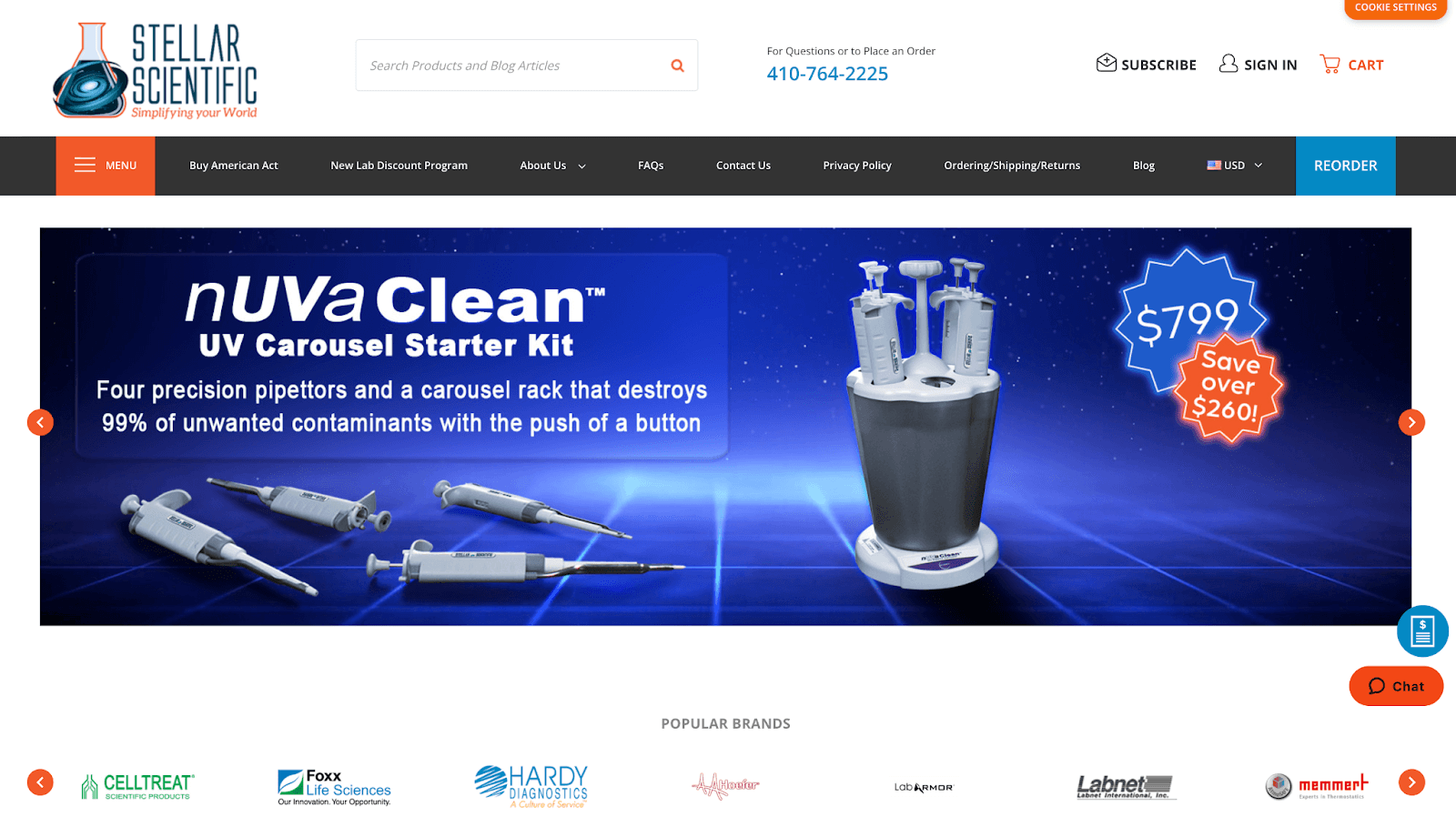
The priority was reducing friction at the surface level. The storefront was rebuilt with a focus on clarity and predictability, especially for technical buyers who move quickly and expect structure.

Navigation was simplified, visual hierarchy tightened, and mobile behavior made more consistent. The result was a storefront that feels intentional rather than crowded, allowing users to orient themselves and move through the catalog without hesitation.


2. Advanced Search and Filtering

Search and filtering were treated as core infrastructure, not cosmetic enhancements.

Optimum7 implemented a custom discovery layer powered by Elasticsearch, designed to handle technical attributes, large catalogs, and real-time updates without slowing the experience. Customers can narrow results precisely using relevant specs, availability, and pricing signals, while the system stays responsive even as data changes.

Behind the scenes, admin-side controls and automated synchronization ensure filters remain accurate as products, inventory, and categories evolve without requiring constant manual tuning.


3. Custom Reorder Functionality

Repeat purchasing was streamlined by eliminating unnecessary steps between intent and checkout.

A custom reorder experience surfaces frequently purchased items directly within the customer account area, allowing buyers to rebuild past orders quickly instead of searching the catalog again. Quantities can be adjusted inline, stock is validated before items are added, and the flow remains fully anchored to BigCommerce’s native checkout.

This preserves transactional reliability while dramatically reducing effort for repeat customers.


4. Persistent Product Comparison

Product comparison was designed to support ongoing research, not momentary snapshots.

Customers can compare key technical attributes side by side, and the system maintains comparison data across sessions to prevent work loss between visits. Because the system pulls directly from BigCommerce custom fields, Stellar Scientific retains full control over which specifications matter and can adapt comparison logic as the catalog changes.

Results

The outcome was a more capable BigCommerce storefront designed for technical buying behavior. Discovery is faster, evaluation is clearer, and repeat purchasing is significantly smoother, all without introducing platform fragility or long-term maintenance burden.

Key Outcomes

  • Storefront experience aligned with technical buying expectations: Navigation, hierarchy, and interaction patterns were refined to support spec-driven decision-making rather than casual browsing. 
  • Faster, more precise product discovery at catalog scale: Advanced search and filtering allow customers to narrow results by meaningful technical attributes without performance degradation as the catalog grows. 
  • Reduced friction for repeat purchasing: Purpose-built reorder workflows let returning customers move from purchase history to cart quickly, without manual rebuilds or unnecessary steps. 
  • Persistent product comparison across sessions: Side-by-side comparison remains available as research continues, supporting confident decisions instead of forcing users to restart evaluation. 
  • Scalable, maintainable architecture: All enhancements were implemented in a way that supports ongoing catalog expansion without slowing performance or increasing admin overhead. 


Business Impact

With these improvements in place, Stellar Scientific now operates a storefront that functions as a technical purchasing tool rather than a generic eCommerce site:

  • Customers narrow options and validate specifications faster, with less second-guessing 
  • Repeat buyers complete orders more efficiently, reducing time-to-purchase 
  • Product comparison supports real evaluation instead of forcing tab-hopping or note-taking 
  • Catalog growth is easier to manage because discovery is structured and predictable 
  • Internal teams maintain greater control through admin-side workflows, reducing reliance on ongoing development 

Most importantly, the experience feels more trustworthy. By removing small but compounding friction points, the site reinforces confidence at every stage of the buying process.


Strategic Outcome

This was not a set of isolated feature upgrades. It was a coordinated system improvement.

Search, filtering, reordering, and comparison now work together to support a single outcome: helping customers reach the correct product faster, purchase with confidence, and return to reorder without unnecessary effort. The foundation remains quick, maintainable, and flexible, ready for the next phase of catalog growth and experience iteration.

Share on Social Media
Your AI Visibility Report Awaits