10 Minute Read

Restoring Search Visibility and Scaling Revenue Case Study – MTPoolDistributors.com

How MTPoolDistributors.com Recovered from a 65% Organic Traffic Loss and Increased Revenue by 300%

The Business

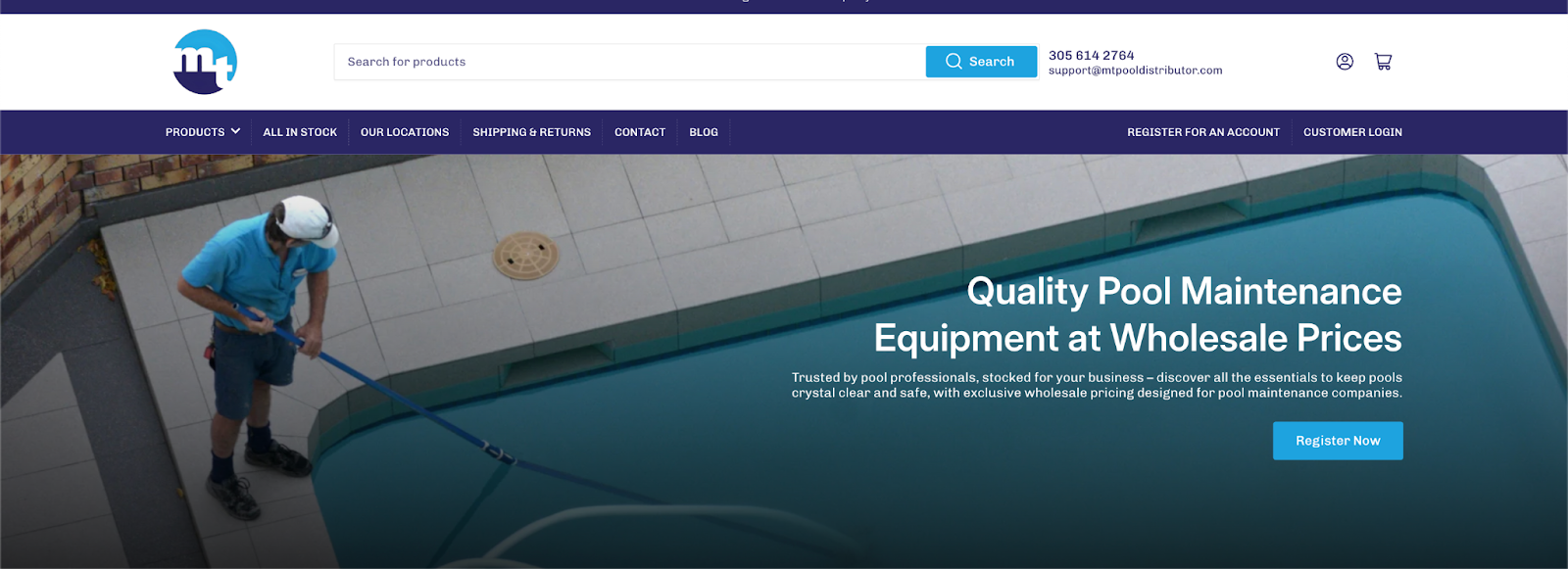
MT Pool Distributors operates in a professional B2B environment where purchasing decisions are practical, time-sensitive, and built on trust. Their customers pool contractors, service companies, and specialty retailers buy based on compatibility, reliability, and delivery certainty. When a technician needs a replacement pump or a contractor requires equipment for an installation, the expectation is simple: the right product, available quickly, with no confusion.

MT Pool built its catalog around that expectation. With thousands of professional-grade SKUs sourced from respected manufacturers, the company positioned itself as a dependable supply partner within the industry.

However, discoverability is everything in distribution.

Following Google’s December 2024 spam algorithm update, MT Pool experienced a serious disruption. Organic traffic dropped by approximately 65%. Category rankings declined, product visibility weakened, and inbound discovery slowed significantly. For a wholesale distributor, this was not a cosmetic setback; it disrupted a primary acquisition channel and placed additional pressure on paid and referral channels to compensate.

Recovery required more than technical patchwork. It required rebuilding trust with search engines while protecting revenue along the way.

The Objective

The mandate was not simply to “regain traffic.” It was to restore steady, qualified demand while reducing exposure to future algorithm shifts.

Optimum7 was tasked with rebuilding organic visibility across revenue-driving categories and product pages while simultaneously creating a multi-channel acquisition system capable of sustaining performance during recovery.

This required:

  • Reestablishing keyword coverage across core product and equipment categories
  • Improving crawl efficiency and index consistency across a large wholesale catalog
  • Increasing qualified B2B traffic rather than vanity session growth
  • Supporting conversion performance across both organic and paid channels
  • Stabilizing revenue while rebuilding long-term search equity

The goal was lasting resilience, not a temporary bounce.


Key Business Challenges

1. A Severe Post-Update Visibility Decline

The December spam update triggered a dramatic 65% drop in organic traffic and keyword rankings. Previously stable category pages lost ground, and product pages with repetitive or thin descriptions became less competitive. The effect was immediate: fewer professional buyers discovering inventory and less predictable inbound demand.

2. Gated Wholesale Pricing

MT Pool’s wholesale model requires account registration to view pricing. While standard in B2B distribution, this adds friction during early-stage product research. Competitors displaying pricing openly gained comparison advantages, and some visitors exited before committing to account creation, increasing bounce rates and reducing lead capture.

3. Catalog Scale Without Scalable Optimization

With thousands of SKUs, manual content enhancement was unrealistic. Many product pages suffered from duplicated descriptions, inconsistent metadata, and shallow internal linking. Important categories were buried too deep within the site hierarchy, weakening crawl prioritization and spreading authority too thin.

4. Revenue Could Not Pause During Recovery

Unlike purely informational brands, MT Pool’s organic channel directly influences order volume. Recovery had to occur without sacrificing short-term performance. Paid acquisition was needed to stabilize revenue while organic authority was rebuilt.


The Strategic Challenge

This was not a traditional SEO engagement. It was a structural recovery under constraint.

MT Pool needed to restore credibility with search engines while operating within a gated pricing model and managing a large, technically complex catalog. Content quality signals had to be strengthened, crawl focus reestablished, and category authority rebuilt without relying on short-term tactics that could create new vulnerabilities.

At the same time, revenue flow had to remain intact.

Optimum7’s role was to guide recovery in a way that protected stability while positioning the business for durable growth beyond the algorithm shift.

The Strategy

The recovery plan was built around reinforcement at multiple layers: category authority, scalable product depth, structural clarity, and revenue stabilization through paid channels.


1. Rebuilding Core Revenue Categories

High-value category pages were addressed first. These pages function as primary entry points for contractors searching by equipment type, compatibility, and manufacturer.

Rather than superficial metadata updates, categories were rebuilt around professional buying intent:

  • Copy refined to address compatibility considerations and practical installation contexts
  • Headings restructured to clarify relevance for both users and search engines
  • Content expanded to provide depth without diluting commercial focus

The objective was to reestablish these pages as credible commercial hubs within their respective equipment segments.


2. Scalable Product Content Enhancement

Given the catalog size, Optimum7 implemented an AI-assisted content workflow supported by structured human oversight.

Product pages were systematically rewritten to:

  • Eliminate duplication
  • Clarify compatibility and professional use cases
  • Strengthen the feature explanation in practical terms
  • Improve structured data and metadata consistency

This approach allowed MT Pool to enhance thousands of SKUs efficiently while maintaining consistency across the catalog.


3. Internal Architecture and Crawl Repair

Many revenue-driving pages were buried too deep, weakening both crawl frequency and internal authority flow.

Optimum7:

  • Restructured category-to-product pathways
  • Strengthened accessory and compatibility linking
  • Reduced orphaned pages
  • Consolidated redundant navigation paths

This created clearer signals about which pages deserved prioritization, improving crawl allocation and index reliability.


4. Authority Content for Professional Audiences

MT Pool’s content footprint leaned heavily toward transactional queries. To strengthen trust signals and broaden professional reach, Optimum7 developed targeted authority content focused on industry-relevant topics such as certifications, equipment maintenance standards, and operational best practices.

This expanded brand credibility while introducing earlier-stage professionals into the acquisition funnel.


5. PPC as the Revenue Bridge During Organic Recovery

Paid search was restructured to capture high-intent demand during organic recovery.

Campaign adjustments included:

  • Tighter keyword segmentation
  • Improved match-type discipline
  • Stronger alignment between ads and landing environments
  • Elimination of inefficient traffic segments

This ensured revenue continuity while organic visibility was restored.

Results

Recovery accelerated because improvements were layered rather than isolated. Category relevance strengthened, product substance improved at scale, internal architecture became clearer, and paid channels stabilized acquisition simultaneously.


Total Revenue Growth

Within the first active implementation window, total revenue increased by more than 300% compared to the previous baseline.


Organic Revenue Growth

Organic revenue had fallen to near-zero levels following the update. By August, organic revenue increased by more than 16,000%, marking a meaningful rebound from the post-update trough and signaling restored commercial visibility.


PPC Revenue Growth

Following campaign restructuring, PPC-attributed revenue increased by nearly 20,000%, driven by improved targeting and reduced inefficiency.


Strategic Outcome

MT Pool Distributors did not simply recover traffic; it rebuilt structural strength.

Category authority was reinforced. Product-level depth was improved at scale. Internal architecture clarified crawl priority. Paid acquisition stabilized revenue during the rebuilding phase. Authority content broadened professional reach.

The result is a stronger acquisition engine with improved resilience against algorithm volatility and a more balanced demand portfolio across organic and paid channels.

MT Pool moved from reactive recovery to controlled growth, turning a severe traffic loss into an opportunity to rebuild the business on firmer digital ground.

Share on Social Media
Your AI Visibility Report Awaits