10 Minute Read

Enterprise Automotive eCommerce Migration & Custom Functionality Case Study – LCEPerformance.com

How Optimum7 Migrated 273,000+ Orders and Rebuilt Vehicle-First Commerce on BigCommerce for LC Engineering

The Business

The automotive performance aftermarket doesn’t behave like typical eCommerce.

Customers aren’t browsing casually or shopping by generic categories. They’re trying to find parts that fit a very specific vehicle, and buying the wrong part isn’t a minor inconvenience. It leads to frustration, returns, and lost trust almost immediately.

LC Engineering has been operating in this environment for more than three decades. They specialize in performance components for Toyota trucks and SUVs, serving off-road enthusiasts, racing professionals, and serious builders who rely on accuracy and consistency. Their catalog supports well-known Toyota powertrains like the 22R, 22RE, 3RZ, and 2TR engines, and their reputation is built on parts that fit correctly and perform as expected.

The complexity of LC Engineering’s business lies in the way customers make their purchases.

In addition to vehicle-specific compatibility, many products are sold as complete performance systems. These KIT products allow customers to configure multiple components into a single solution, where each selection affects pricing, availability, and fulfillment.

Over time, LC Engineering built a significant digital footprint:

  • 273,000+ historical orders
  • 154,000+ customer accounts
  • 6,700+ products, each tied to detailed fitment rules, documentation, and pricing logic

This wasn’t just a dataset; it represented decades of operational history, customer trust, and organic search visibility.

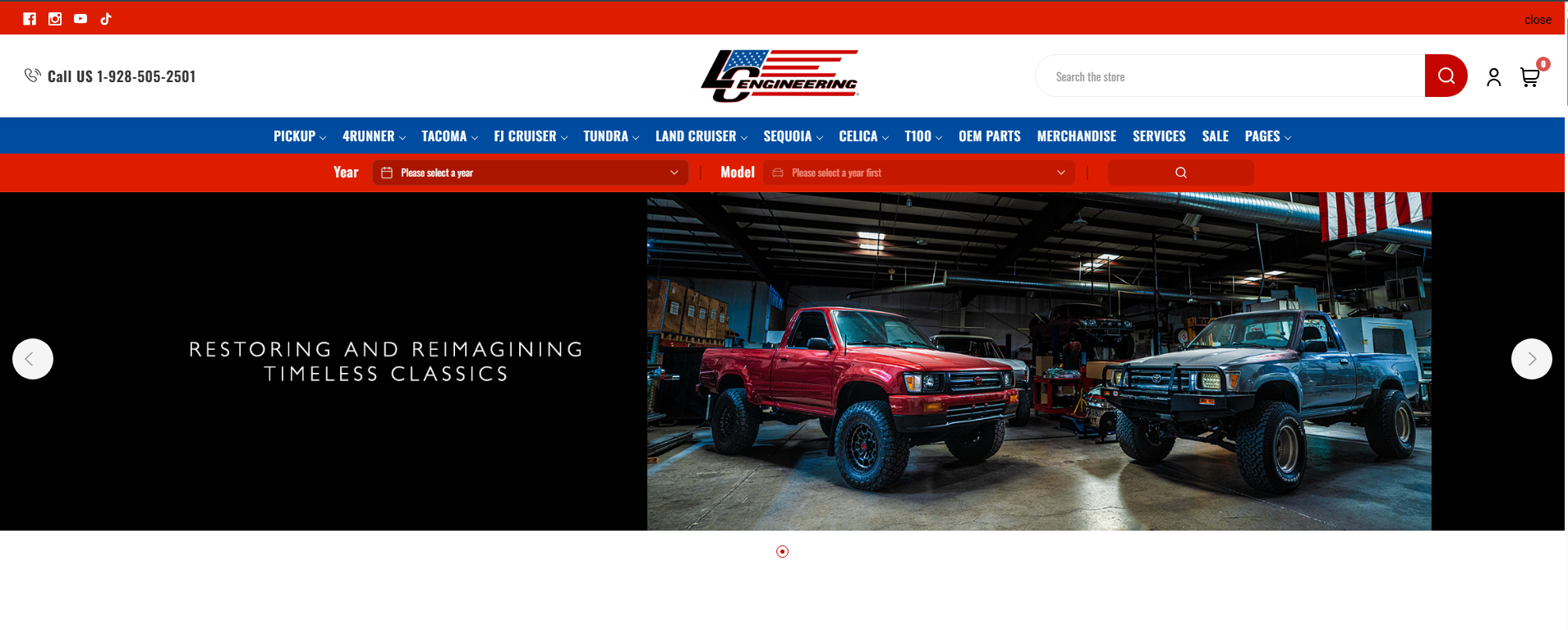
When LC Engineering decided to move off its legacy Volusion platform, the goal wasn’t to reinvent the business. The goal was to modernize the platform without disrupting its existing functionality.

The Objective

The objective of this project was simple in theory but complex in execution: migrating LC Engineering to a modern eCommerce platform without disrupting the business.

The migration needed to happen without compromising the operational history, customer trust, or organic visibility LC Engineering had built over decades. From the outset, success was defined by a set of strict, non-negotiable requirements:

  • Zero loss of historical data, including orders, customers, products, and their relationships
  • Zero negative impact on SEO, preserving existing rankings, indexed URLs, and inbound traffic
  • No downtime or operational instability during or after launch
  • Full preservation and improvement of vehicle-based browsing and KIT product functionality, which are core to how LC Engineering sells

This was not a redesign initiative or a marketing refresh. It was a foundation-level platform migration, designed to support LC Engineering’s next phase of growth while protecting the systems and workflows the business depended on every day.


Key Business Challenges

Migrating LC Engineering was not a standard platform transition. It introduced multiple, interconnected challenges that had to be addressed together to avoid compounding risk.

1. Enterprise-Scale Data Migration

LC Engineering was not moving a small or simple store. The migration involved:

  • Hundreds of thousands of historical orders
  • Over a hundred thousand customer records
  • Thousands of products connected through years of transactions

We needed to accurately link orders to the correct customers, products, and fulfillment data. Any break in those relationships would impact reporting, customer service, and warehouse operations.

This level of complexity required a controlled, validated migration approach, not a basic export-and-import process.

2. Automotive Product Discovery

LC Engineering customers don’t start by searching for product names; they start with their vehicle.

Without proper filtering, customers are forced to sift through thousands of products and manually verify fitment, leading to confusion, abandoned sessions, and increased support requests.

The challenge was enabling vehicle-first browsing, allowing customers to select year, make, and model once and then see only compatible products across categories and search without slowing the site or adding friction, especially on mobile.

3. Highly Configurable KIT Products

LC Engineering’s KIT products represent complete performance systems, not simple variants.

Each KIT allows customers to select from multiple components, where every choice affects pricing, inventory availability, and fulfillment requirements. BigCommerce’s native variant structure was not designed to handle this level of conditional logic.

Replicating KIT functionality required a custom solution that extended the platform’s capabilities while maintaining a seamless shopping and checkout experience.

4. SEO Continuity

Years of organic search visibility were tied to LC Engineering’s existing URLs, content structure, and product pages. Any disruption during migration would risk traffic loss and long recovery timelines.

SEO preservation needed to be built into the migration process itself, not treated as a post-launch fix. Redirects, metadata, and technical signals all had to be handled deliberately to ensure continuity.


The Strategic Challenge

Maintaining control from start to finish was the most challenging aspect of this project, not the migration itself.

LC Engineering needed to modernize its platform without carrying over fragile logic, accumulated workarounds, or SEO exposure. At the same time, the new solution couldn’t become overly complex, as that would simply recreate the same maintenance and scalability issues on a different platform.

Optimum7’s role was to balance speed with discipline, moving efficiently while maintaining strict control over data integrity, platform behavior, and search continuity. Every choice was made to put long-term stability and flexibility ahead of short-term fixes.

The Strategy

Optimum7 carried out the LC Engineering migration by focusing on managing risks first and using a strategy that fits the platform, which aimed to eliminate uncertainties before starting and maintain stability throughout the process.

Since LC Engineering was running a live store that made money and relied on a lot of past data, the strategy prioritized getting things right rather than rushing, making sure that data accuracy, search functions, and SEO consistency were always top priorities.


1. Enterprise Data Migration

The migration began with a comprehensive mapping process between Volusion and BigCommerce. Every data object, including orders, customers, products, attributes, and relational dependencies, was mapped field by field to ensure accuracy and preserve historical relationships.

Rather than executing a single bulk migration, the process was staged and validated, with multiple checkpoints built in to catch discrepancies early. Complex records, including KIT orders and long-term customer purchase histories, received additional manual QA to confirm integrity beyond a successful import.

This made sure that historical data was not only moved but also stayed usable and reliable for reporting, customer service, and fulfillment after launch.


2. Year-Make-Model (YMM) Finder Functionality

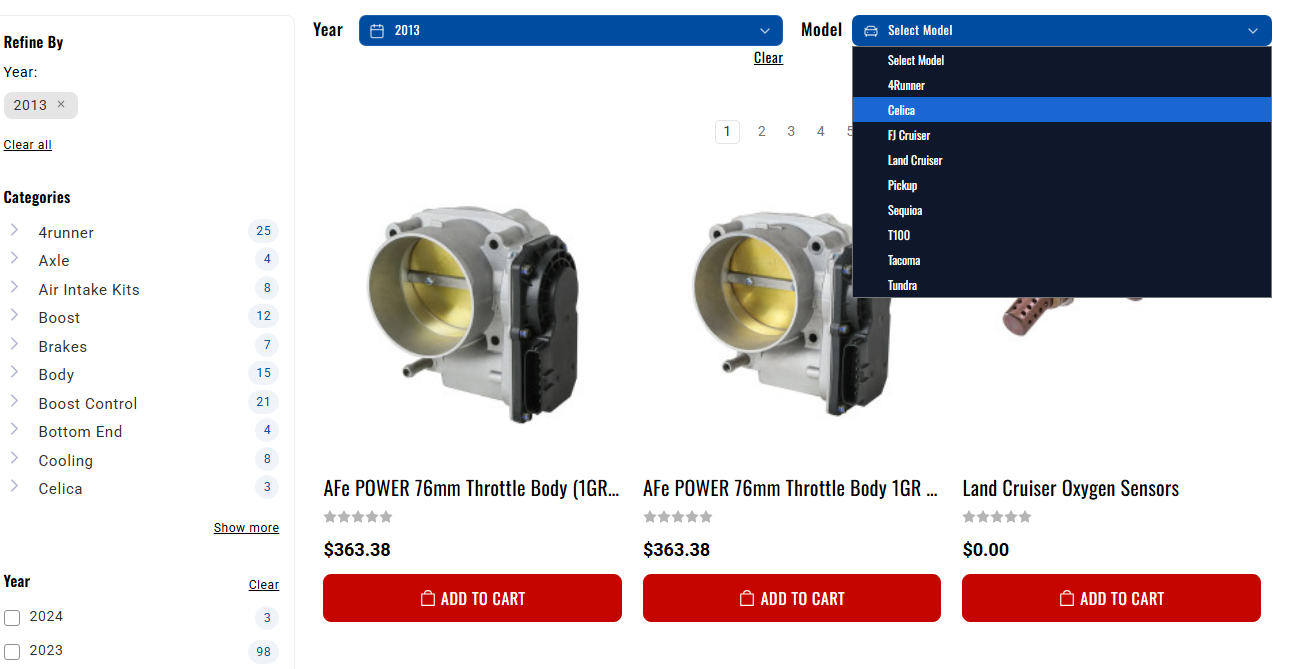
To address the discovery challenges inherent to automotive eCommerce, Optimum7 developed a custom Year-Make-Model (YMM) finder tailored to LC Engineering’s catalog.

Customers select their vehicle once and immediately see only compatible products across category pages and search results. The selection persists throughout the browsing session, reducing friction, minimizing fitment errors, and improving the overall shopping experience, especially on mobile.

This transformed the catalog from a generic product list into a vehicle-first parts finder, aligning the storefront with how customers actually shop.


3. Custom KIT Product Configurator

LC Engineering’s KIT products required functionality far beyond standard eCommerce variants.

Optimum7 engineered a custom solution for KIT configuration that allows customers to build complete performance systems directly on the product page. As choices are made, prices change in real time, compatibility rules stop invalid combinations, and availability is shown at the component level.

The full configuration carries through cart and checkout, providing clarity for customers and accuracy for fulfillment teams. On the backend, LC Engineering gained administrative tools to manage KIT structures, pricing logic, and inventory dependencies without ongoing development involvement.


4. SEO Preservation & Launch Control

SEO preservation was treated as a core migration layer, not a post-launch task.

Every legacy URL, including product pages, categories, and content, was mapped and redirected using 301 logic. Metadata, structured data, and technical SEO signals were preserved to ensure continuity for search engines and users alike.

After the launch, monitoring showed that rankings, indexing, and organic traffic stayed the same. This meant that LC Engineering could change platforms without losing years of SEO work.

Results

The migration launched with validated continuity, no data loss, no SEO disruption, and no operational downtime, an essential outcome given the scale, complexity, and revenue dependency of LC Engineering’s eCommerce operation.

Beyond the platform move itself, the project delivered a stable, scalable commerce foundation that protects daily operations while enabling long-term growth.


Key Outcomes

Complete Data Continuity

  • 273,000+ historical orders migrated with full transactional detail
  • 154,000+ customer accounts transferred intact, with purchase history preserved
  • 6,700+ products migrated with fitment data, attributes, and documentation


Automotive-Specific Commerce Functionality

  • Custom Year-Make-Model filtering deployed to support vehicle-first shopping
  • Advanced KIT product functionality is fully replicated and enhanced within BigCommerce


SEO Preservation at Scale

  • 100% of SEO equity preserved through comprehensive 301 redirect implementation
  • Legacy URLs, metadata, and search visibility are maintained throughout the transition


Business Impact

With BigCommerce in place, LC Engineering now operates on a platform that aligns with the actual sales of automotive performance products.

As a result:

  • Customers find compatible products faster through vehicle-first discovery
  • KIT products continue to drive high-value orders with clearer configuration and pricing
  • Fitment-related support inquiries are reduced
  • Organic search remains a consistent source of qualified traffic
  • Internal teams manage products, pricing, and fitment data with greater confidence and less friction

Most importantly, LC Engineering gained a future-ready eCommerce foundation without sacrificing the operational history, customer trust, or search visibility built over decades.


Strategic Outcome

This was not just a platform migration.

It was a controlled transformation that preserved revenue streams, protected search equity, and elevated the buying experience for a highly specialized automotive audience.

By combining enterprise-grade migration discipline with custom automotive solutions, Optimum7 delivered an eCommerce platform built for precision, scalability, and long-term growth, positioning LC Engineering to move forward with confidence.

Share on Social Media
Your AI Visibility Report Awaits