A digital marketing strategy is the path to profitability. Optimum7 can help you set the right goals, offer and implement creative and technical strategies, and use data and analytics to review and improve your business’s performance.


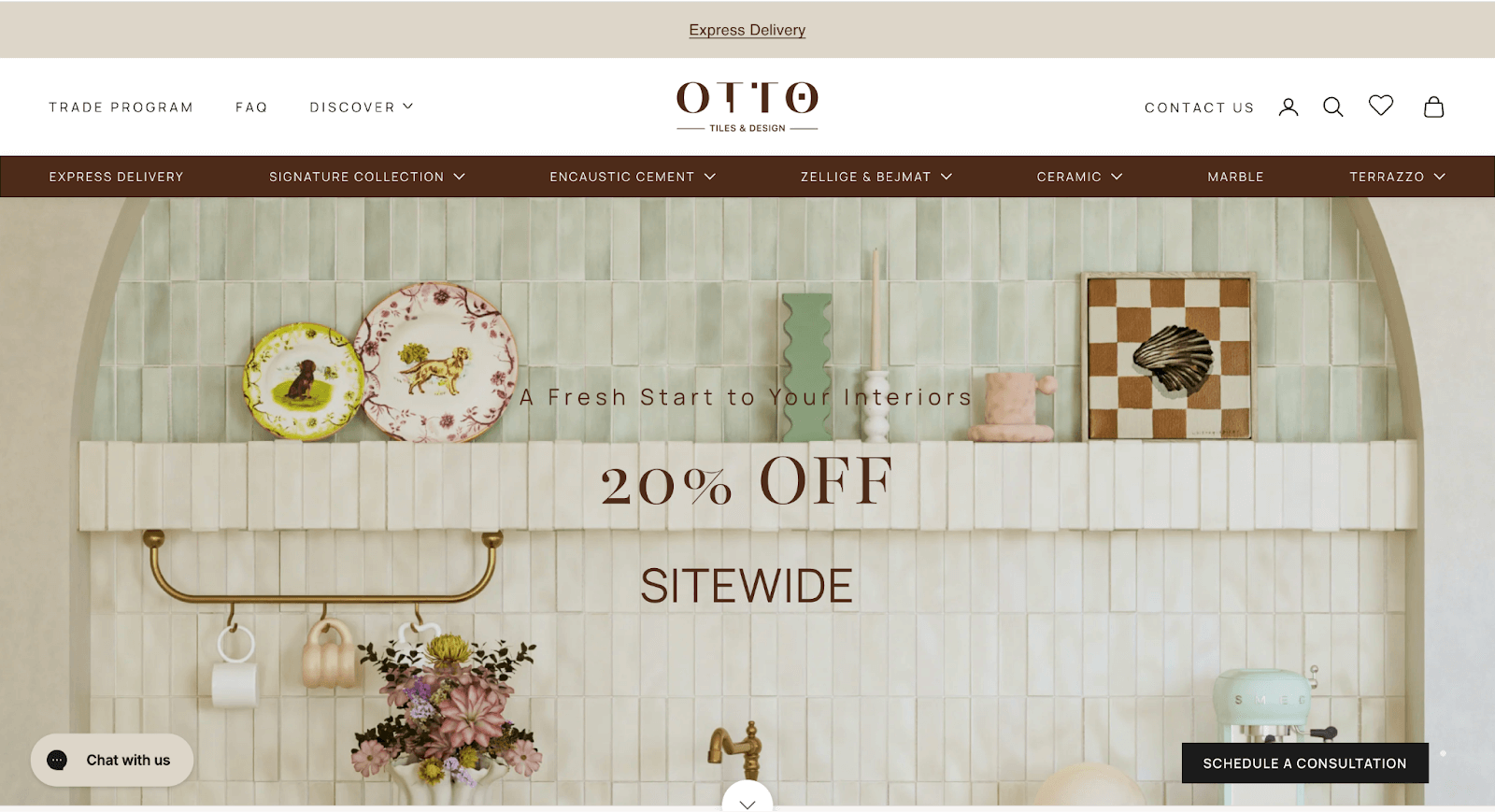
Otto Tiles operates two independent eCommerce stores serving customers in the UK and the US. Over time, both stores had grown organically on WooCommerce, accumulating a significant amount of product data, customer records, historical orders, and supporting content.
While WooCommerce supported the business in its earlier stages, it gradually became harder to manage as complexity increased. Plugin dependencies multiplied, performance became less predictable, and maintaining consistency across two regional storefronts required more effort with each passing year.
At that point, the decision to migrate came down to one thing: stability. Otto Tiles needed a platform that could support its scale reliably, reduce ongoing maintenance overhead, and give them a clean foundation for future growth.
Otto Tiles partnered with us to lead a controlled migration of both live stores to Shopify, with a strong emphasis on accuracy, continuity, and long-term maintainability.
The objective of this project was straightforward in concept but high-stakes in execution: migrate two live, revenue-generating WooCommerce stores (UK and US) to Shopify while protecting business continuity across every critical layer of data, SEO, and operations.
For Otto Tiles, success was defined by three non-negotiables:
This was a platform foundation project aimed at exiting WooCommerce cleanly and launching on Shopify with a stable architecture that could support long-term growth without carrying over technical debt.
Migrating two mature storefronts introduced real business risk, especially given the volume of historical data and the fact that both sites were actively generating revenue.
Both stores were in daily use, meaning the migration had to be executed without interrupting order processing, customer journeys, or internal workflows. Even minor launch issues would have an immediate downstream impact.
The migration required full integrity across a large dataset, including:
Accuracy mattered beyond import success; any mismatch could create reporting gaps, customer service complications, or fulfillment errors.
Both stores had established organic traffic anchored to legacy URL structures. Redirects had to cover every legacy URL to prevent ranking loss, broken links, and disrupted customer acquisition funnels.
The UK and US stores needed to remain consistent in layout, navigation, and usability, while still operating independently with different payment providers, shipping rules, and tax logic. The challenge was building alignment without forcing a rigid one-size-fits-all structure.
Additional requirements emerged mid-project, including product calculation logic and customer segmentation needs. These had to be evaluated through a stability lens to ensure essential enhancements were delivered without introducing risk to launch quality.
The real challenge here was control.
Otto Tiles needed to leave WooCommerce without carrying over fragile configurations, plugin-driven dependencies, SEO exposure, or data inconsistencies. At the same time, the Shopify build could not become overly complex, because complexity would reduce maintainability and make future iterations harder.
Our role was to balance speed with discipline, moving efficiently while keeping strict control over:
Every decision was made with long-term continuity in mind, ensuring Otto Tiles launched on Shopify with a platform foundation that was stable, scalable, and built to support growth without rework.
We executed the Otto Tiles migration using a risk-first, control-driven strategy designed to eliminate uncertainty before execution and protect platform stability throughout the transition. Given that both the UK and US stores were live, revenue-generating environments, every phase was approached with caution. The strategy was built around layered risk mitigation, addressing data integrity, SEO preservation, storefront consistency, and operational readiness in parallel.
We treated discovery as a preventative planning phase, digging into both WooCommerce environments to understand:
This upfront analysis surfaced migration risks early and let us define a controlled rollout plan grounded in known constraints.
Our guiding principle for data migration was simple but uncompromising: everything had to be migrated accurately and remain usable after launch. Across both storefronts, we migrated:
All data was normalized to align with Shopify’s native structure. This ensured that the resulting catalogs were complete, clean, consistent, and easy to manage going forward without introducing workarounds or structural debt.
We treated SEO preservation as a core migration layer from day one. Every legacy URL across products, categories, and content pages was mapped and redirected using comprehensive 301 redirect logic, which ensured:
Search engines and users were automatically routed to the correct Shopify pages, allowing both stores to transition platforms without sacrificing discoverability or inbound traffic.
All informational and policy pages were migrated from WordPress and WooCommerce to Shopify, including the About pages, shipping policies, and supporting content. Each page was reviewed to ensure:
This produced a smooth customer experience across the new platform, with no content gaps or usability issues.
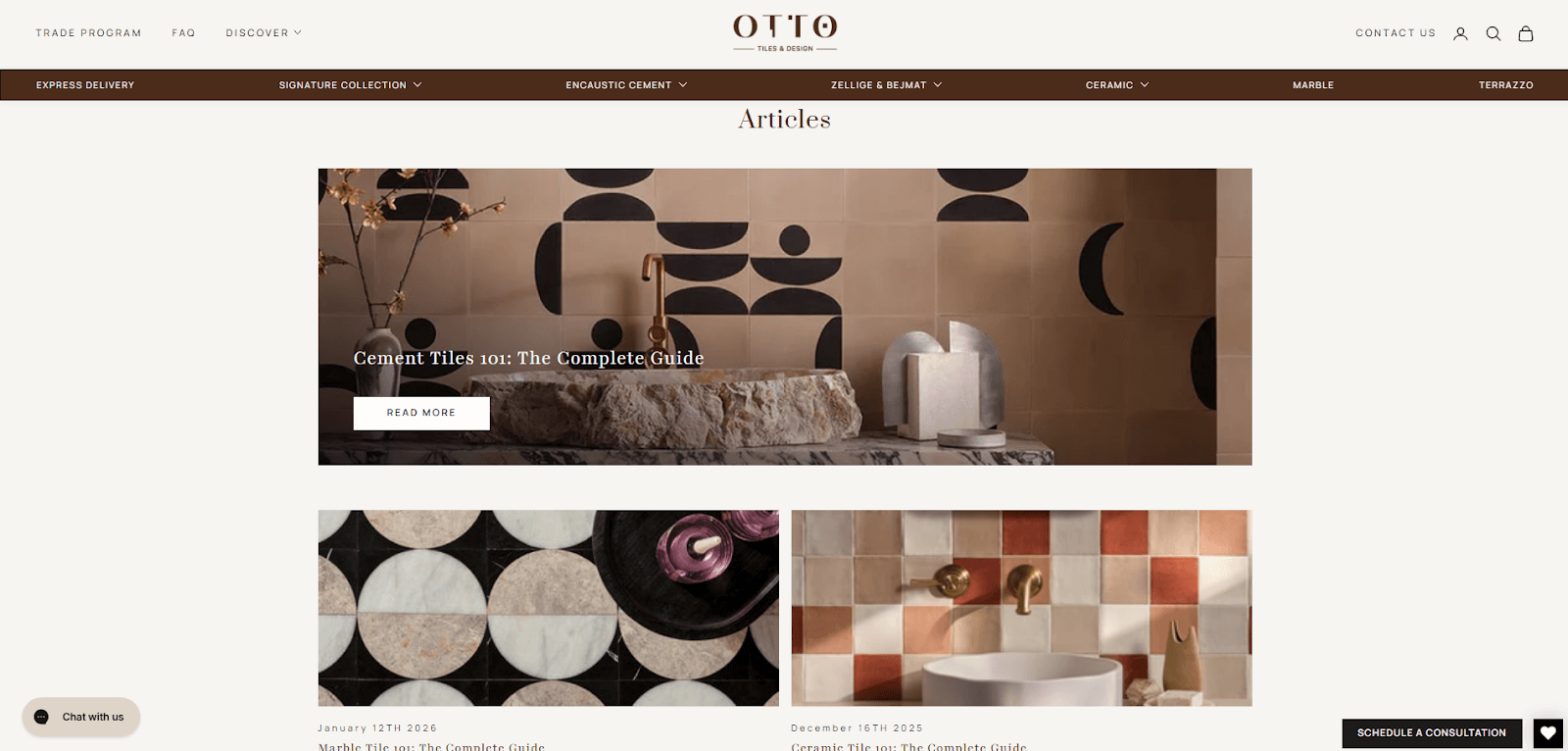
Migrated content and policy pages rebuilt within Shopify’s native content framework.
A unified design system was implemented across both storefronts to maintain visual consistency while allowing for independent regional operations. A complete Figma design was created and reviewed across multiple feedback cycles before development began. Theme selection was guided by performance, scalability, and day-to-day usability.
Navigation structure, layout behavior, and UI patterns were implemented according to approved designs and tested across devices. Within Shopify’s native capabilities, we added conversion-supportive elements such as:
All enhancements remained platform-native to preserve performance, maintainability, and upgrade compatibility.
Both Shopify environments were fully configured to support live operations, including:
End-to-end testing confirmed that orders could be placed, processed, and communicated reliably across both the UK and US stores from day one.
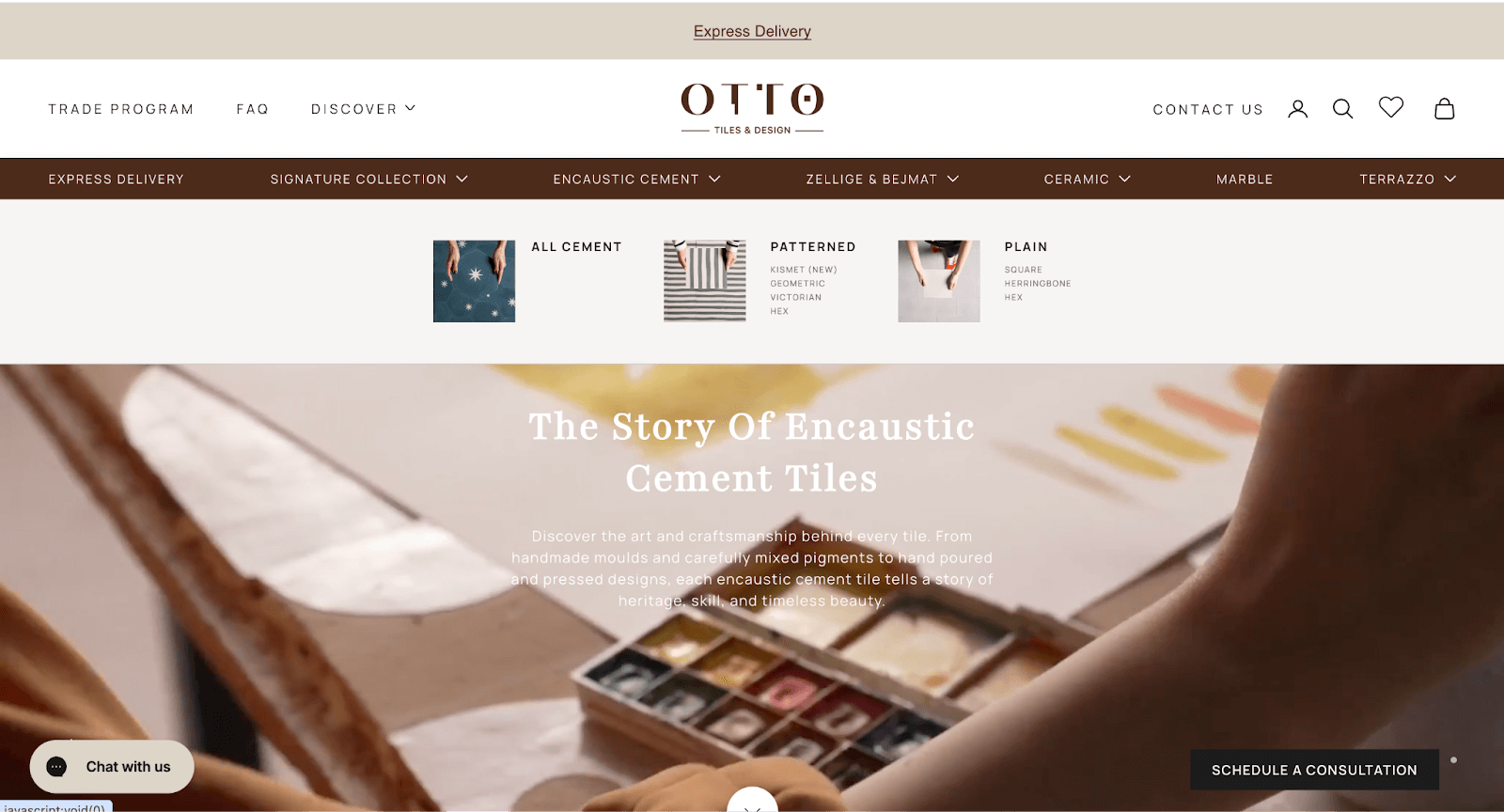
Both storefronts configured for payments, shipping, taxes, and notifications ahead of launch.
Midway through the project, additional requirements were introduced, including:
To protect launch stability, these enhancements were evaluated through a risk lens. Non-critical items were intentionally deferred to post-launch, allowing the core migration to remain controlled, predictable, and reliable. This approach ensured that added functionality did not compromise platform stability or delivery quality.
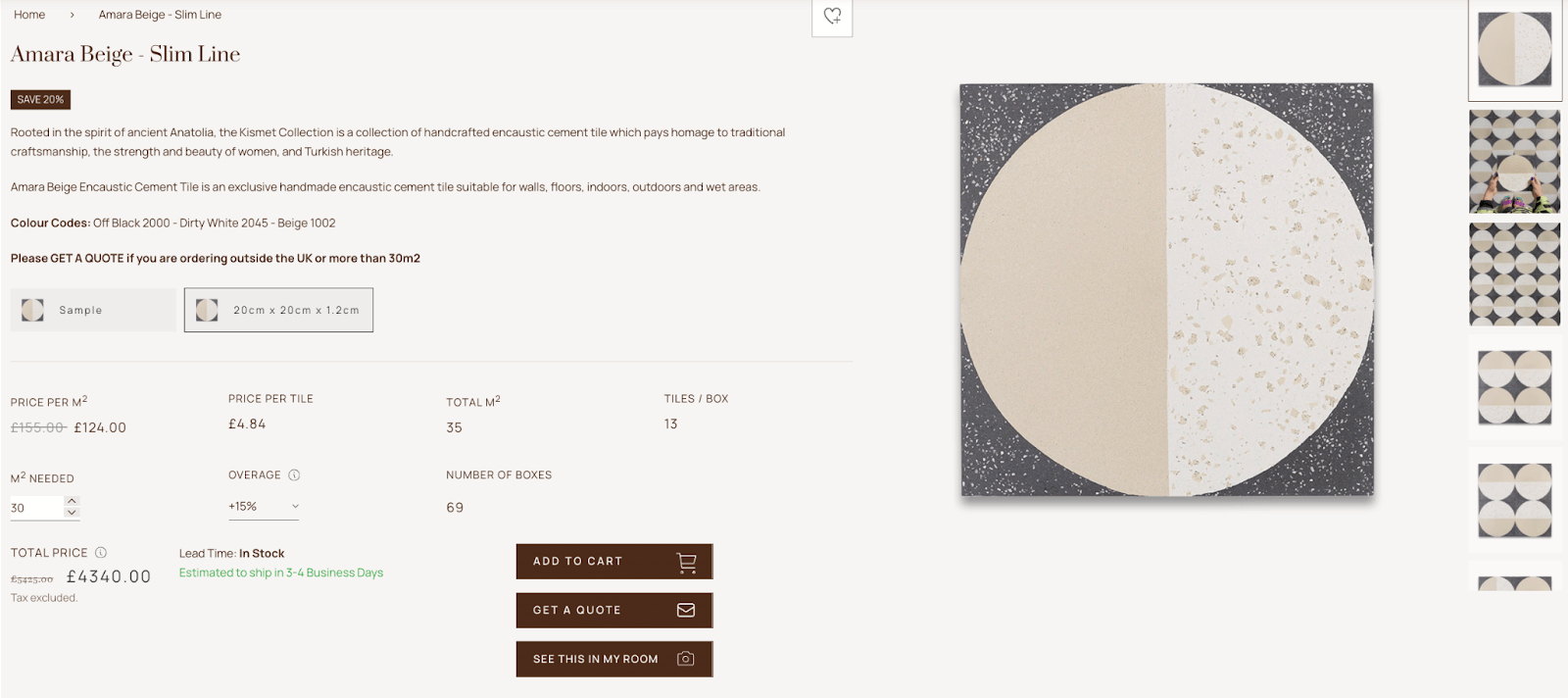
A static product calculation feature for square footage, box quantities, and tile coverage.
We introduced third-party tools selectively, based on clear operational value:
A curated social media feed was also integrated to showcase real-world installations and brand imagery, maintaining visual continuity without pulling users off-site.
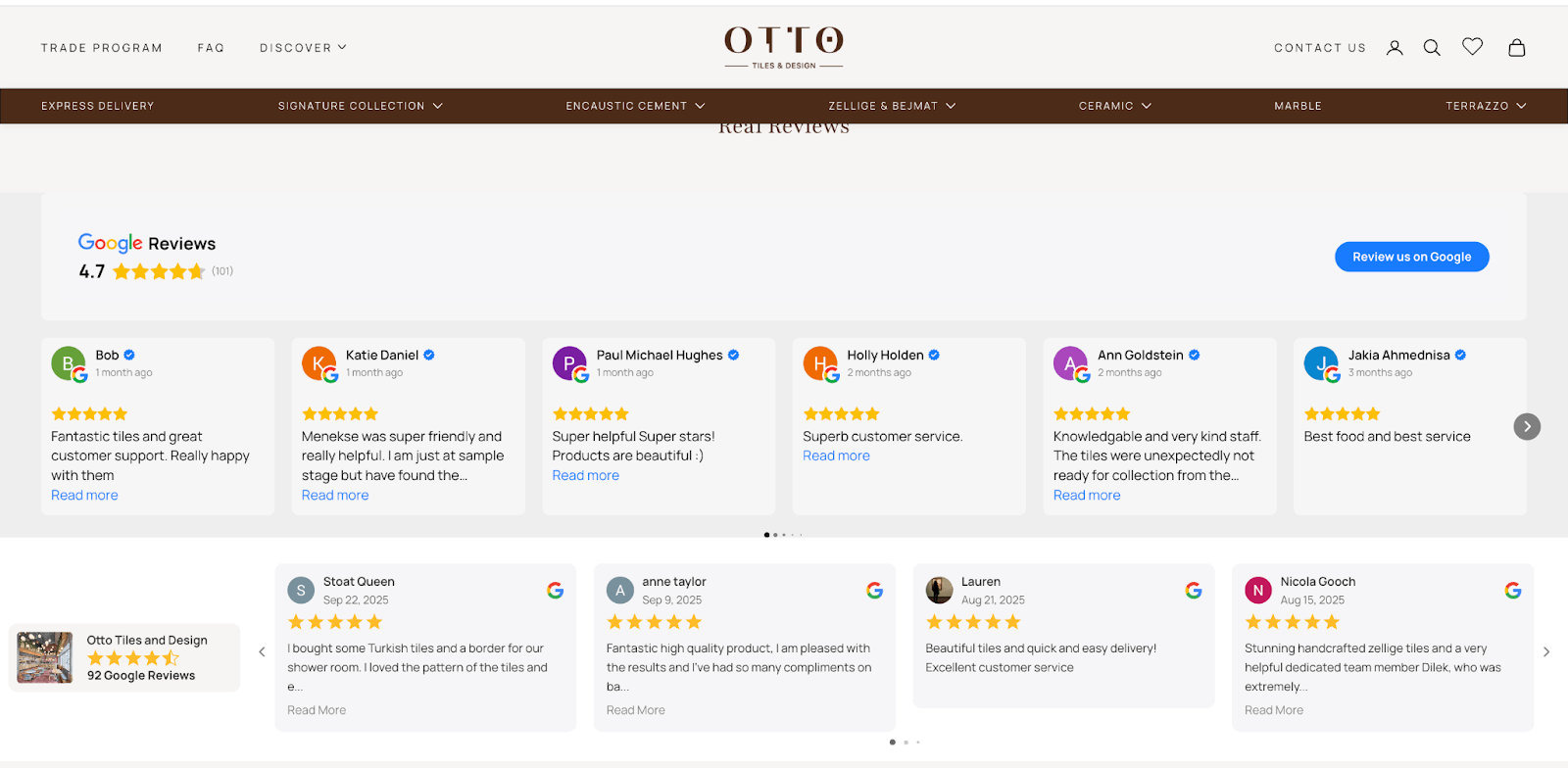
Structured product reviews and support tooling integrated through platform-native apps.
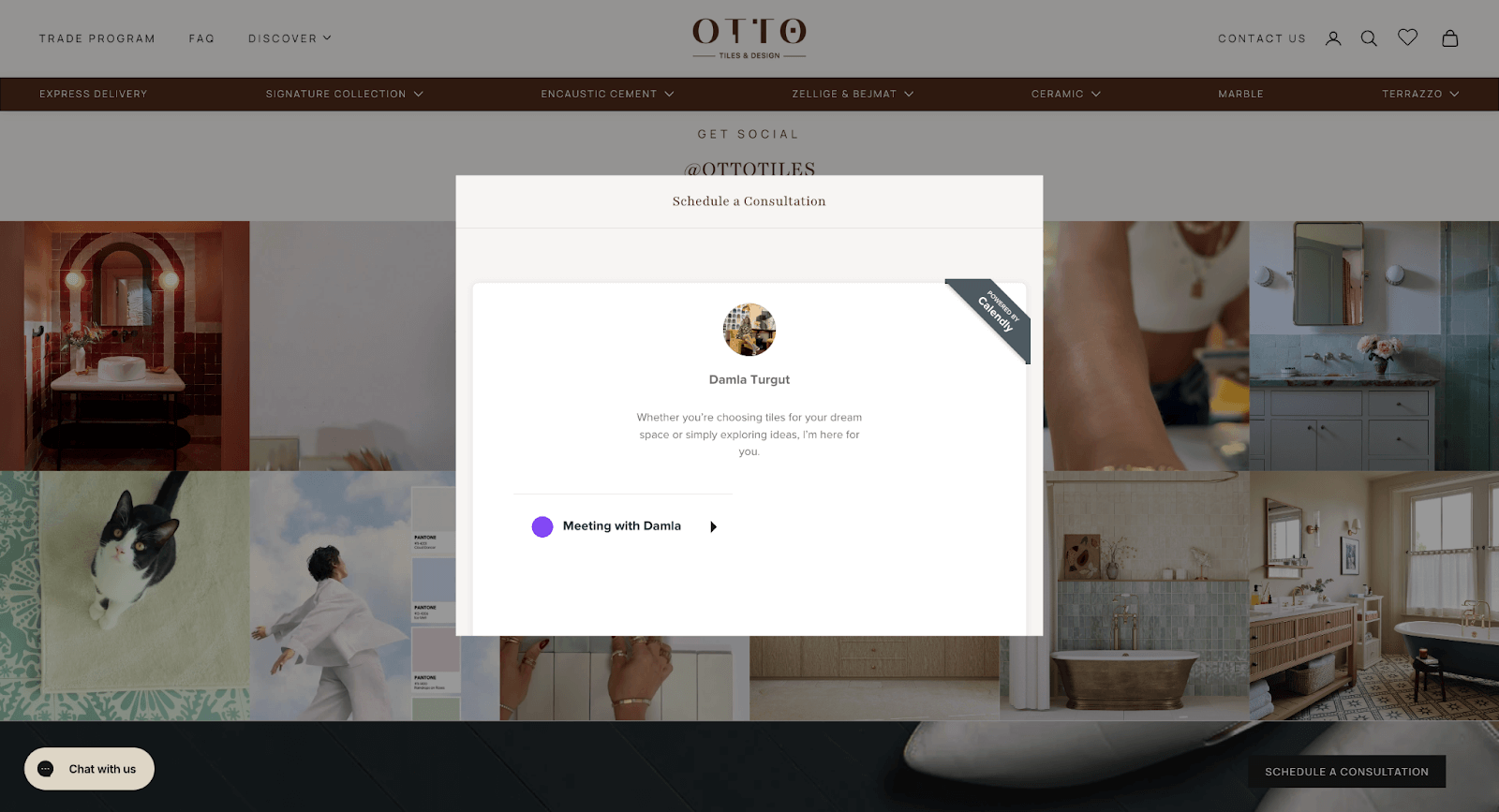
A curated social media feed showcasing real-world installations on-site.
By prioritizing risk control, platform-native execution, and disciplined scope management, we delivered a migration that protected Otto Tiles’ business while setting up both stores for long-term scalability.
The result was a stable, future-ready commerce foundation built to support continued growth across both markets.
The migration of Otto Tiles’ UK and US stores from WooCommerce to Shopify was completed successfully, with no critical data loss, no disruption to organic search visibility, and no operational downtime during or after launch.
The project delivered a clean, stable eCommerce foundation that protects day-to-day operations while enabling long-term growth across both markets.
With Shopify in place, Otto Tiles now operates on a more resilient and scalable commerce platform. Day-to-day operations are simpler, administrative overhead is lower, and internal teams spend less time managing platform issues and more time supporting growth initiatives. The business is no longer constrained by fragile configurations or maintenance-heavy dependencies.
The new foundation supports:
The project produced a controlled, future-ready eCommerce infrastructure across two Shopify storefronts. By prioritizing data accuracy, SEO preservation, and disciplined execution, we helped Otto Tiles transition platforms without disruption while positioning the business for long-term operational efficiency, flexibility, and growth across both the UK and US markets.

Both Otto Tiles stores live on Shopify across the UK and US markets.
Fill out the form to request a Custom Marketing or Conversion Optimization Strategy for your Website.